
Supercharger Rebuilds on Performance Jet Skis: Timing and Cost
Learn the critical timing and costs for a jet ski supercharger rebuild. Our 2026 guide covers warning signs and DIY vs. pro costs to prevent catastrophic engine failure.
The Ultimate Guide to a Jet Ski Supercharger Rebuild: Timing and Cost
The exhilarating rush of a supercharged jet ski is undeniable. That instant acceleration and blistering top speed are what set performance personal watercraft (PWC) apart from the crowd. But with great power comes great responsibility, and the heart of that power, the supercharger, requires specific and timely maintenance. Neglecting this crucial component can lead to catastrophic engine failure and costly repairs. This guide provides everything you need to know about the essential jet ski supercharger rebuild, including when to do it, what signs to look for, and how much it will cost in 2026, ensuring you keep your high-performance machine running at its peak for years to come.
What is a Jet Ski Supercharger and Why Does It Need Rebuilding?
Think of a supercharger as a high-speed air pump for your engine. Its job is to force more air into the combustion chambers than the engine could naturally draw in on its own. More air means more fuel can be burned, resulting in a significant boost in horsepower and torque. This process, known as forced induction, is what gives models like the Sea-Doo RXT-X and Yamaha GP1800R SVHO their breathtaking performance. However, this power comes at a price. The internal components of a supercharger spin at incredibly high RPMs, often exceeding 40,000 RPM, creating immense heat and stress.
Inside the supercharger housing are several critical wear items. These include bearings that allow the main shaft to spin freely, a gear set that drives the impeller, and, most famously on older Sea-Doo models, clutch washers. Over time, these components degrade. Bearings can lose their lubrication and fail, gears can develop play, and the original ceramic clutch washers were notorious for shattering. When any of these parts fail, they can send metal or ceramic fragments directly into your engine, causing devastating damage to pistons, cylinder walls, and valves. A scheduled jet ski supercharger rebuild is not just preventative maintenance; it's essential insurance against a complete engine meltdown.
Key Signs Your Supercharged PWC Needs a Rebuild
While adhering to a strict maintenance schedule is the best practice, your PWC will often give you warning signs that its supercharger is in distress. Paying close attention to your ski's behavior is crucial for catching a problem before it becomes a catastrophe. Ignoring these symptoms can be the difference between a manageable repair and needing to shop for new jet skis for sale entirely. Some owners in popular riding areas like those browsing jet skis for sale in Texas know these signs all too well.
Performance Degradation Signals
The most common sign of a failing supercharger is a noticeable drop in performance. Your ski might feel sluggish off the line, lacking its usual explosive punch. You may also find that its top speed is 5-10 MPH lower than what you're used to. This happens because the supercharger is no longer efficiently compressing air, either due to a slipping clutch or worn impeller blades. It's a clear indication that the unit is not producing the required boost, and an inspection is needed immediately.
Audible and Physical Warning Signs
Your ears are one of your best diagnostic tools. A healthy supercharger is relatively quiet, often emitting a faint, high-pitched whine during acceleration. If you start hearing new, alarming noises, it's time to worry. A rattling sound at idle or a grinding noise that increases with RPM often points to failing bearings or a damaged gear set. On older Sea-Doo models, a distinct 'chirp' can indicate the supercharger clutch is beginning to slip. Any unusual vibrations felt through the handlebars or hull should also be investigated, as they can signal an imbalance in the supercharger's rotating assembly.
Here is a quick checklist of common warning signs:
- Noticeable loss of acceleration or 'punch'.
- A significant decrease in top-end speed.
- A loud rattling or grinding noise from the engine bay.
- A 'chirping' sound, especially on clutch-driven models.
- Engine hesitation or bogging down under hard acceleration.
- An engine that is difficult to start or idles roughly.
- Receiving a 'check engine' light or fault code on your display.
The Critical Question: When to Perform a Jet Ski Supercharger Rebuild?
This is the million-dollar question for every supercharged PWC owner. The answer depends heavily on the manufacturer, model year, and type of use. For years, the gold standard for Sea-Doo models was a rebuild every 100 hours or 2 years, whichever came first. This was primarily due to the fragile ceramic clutch washers used in models prior to roughly 2012. These washers were known to fail without warning, making the 100-hour interval an absolute necessity.
Fortunately, BRP (Sea-Doo's parent company) switched to more durable steel clutch washers and improved bearing designs. For modern Sea-Doo skis (roughly 2017 and newer), the official recommended service interval has been extended to 200 hours. Yamaha's Super Vortex High Output (SVHO) engines use a different, clutch-less design. While generally considered more robust, the supercharger clutch gear is still a wear item and is often recommended for inspection and potential replacement around the 200-250 hour mark. Regardless of the official interval, a yearly inspection is always a wise decision. If you're looking at used jet skis for sale, always ask for the supercharger service history. A well-maintained ski will hold its value much better, a fact you can verify with our jet ski valuation calculator.
Breaking Down the Cost of a Supercharger Rebuild in 2026
The cost of a jet ski supercharger rebuild can vary significantly based on several factors: whether you do it yourself or hire a professional, the extent of the damage, and your PWC's specific model. Understanding these costs can help you budget effectively and decide the best course of action. Sometimes, depending on the age and condition of your ski, it might make more sense to sell your jet ski and upgrade.
DIY vs. Professional Service Costs
For the mechanically inclined, a DIY rebuild is the most cost-effective option. Supercharger rebuild kits are readily available online. A basic kit, including new bearings, seals, and steel washers (for Sea-Doo), typically costs between $200 and $400. A more comprehensive kit that includes the main shaft and gear set can run from $500 to $800. You will also need specialized tools, such as a press and specific bearing pullers, which can add to the initial cost if you don't already own them.
If you prefer to have a professional handle the job, expect to pay for both parts and labor. Most dealerships and independent PWC shops charge between $90 and $150 per hour for labor. A standard rebuild on a unit that hasn't failed typically takes 3-5 hours. Therefore, you can expect the total cost for a professional jet ski supercharger rebuild to be anywhere from $700 to $1,500 in 2026. If the supercharger has already failed and damaged other components, the repair bill can easily climb much higher. For a significant repair, you might even consider using a jet ski financing calculator to weigh the cost against purchasing a newer model from a dealer in a location like jet skis for sale in South Carolina.
Frequently Asked Questions
Can I still ride my jet ski if the supercharger needs a rebuild?
It is strongly advised not to. If your supercharger is showing signs of failure, such as rattling noises or a significant performance drop, continuing to ride it is a massive gamble. A complete failure can send metal debris through your entire engine, turning a sub-$1500 rebuild into a $5,000+ engine replacement. It's always better to be safe and get it serviced immediately.
How does a supercharger rebuild affect my PWC's value?
A documented and timely jet ski supercharger rebuild significantly increases your PWC's value and desirability on the secondhand market. It shows potential buyers that the ski has been properly maintained and that a major potential failure point has been addressed. Conversely, a ski that is past its recommended service interval without a rebuild will be worth considerably less, as the buyer will have to factor in the immediate cost and risk.
Is a Yamaha supercharger rebuild different from a Sea-Doo?
Yes, they are mechanically different. Sea-Doo superchargers are belt-driven and, on most models, use a clutch pack that engages and disengages. Yamaha SVHO superchargers are gear-driven directly from the engine and do not have a clutch pack. While the rebuild process for both involves replacing bearings and seals, the specific components and procedures differ. Yamaha's system is often seen as more robust, but its clutch gear can still wear and require replacement, which is a more involved job than a standard Sea-Doo rebuild.
Ultimately, a supercharged PWC offers a premium experience on the water, but it demands premium care. By understanding the signs, adhering to service intervals, and budgeting for the inevitable rebuild, you can ensure your investment provides thrilling and reliable performance for many seasons. For more expert tips, be sure to check out our latest jet ski news and guides. When it's time to upgrade, JetSportsTrader is your ultimate destination for finding the perfect new or used performance watercraft.
Ready to buy or sell? Explore the jet ski marketplace, or browse jet skis for sale at Jet Sports Trader.
Related Articles
Jet Ski Hull Repair: Fiberglass Damage, Cracks, and Costs
Learn everything about jet ski hull repair in our complete guide. We cover identifying damage, DIY vs. professional repair, and a full breakdown of 2026 costs.
Jet Ski Overheating: Causes, Warning Signs, and Emergency Fixes
A jet ski overheating issue can ruin your day and your engine. Learn the common causes, critical warning signs, and on-the-water fixes to keep your PWC running cool and reliably all season long.
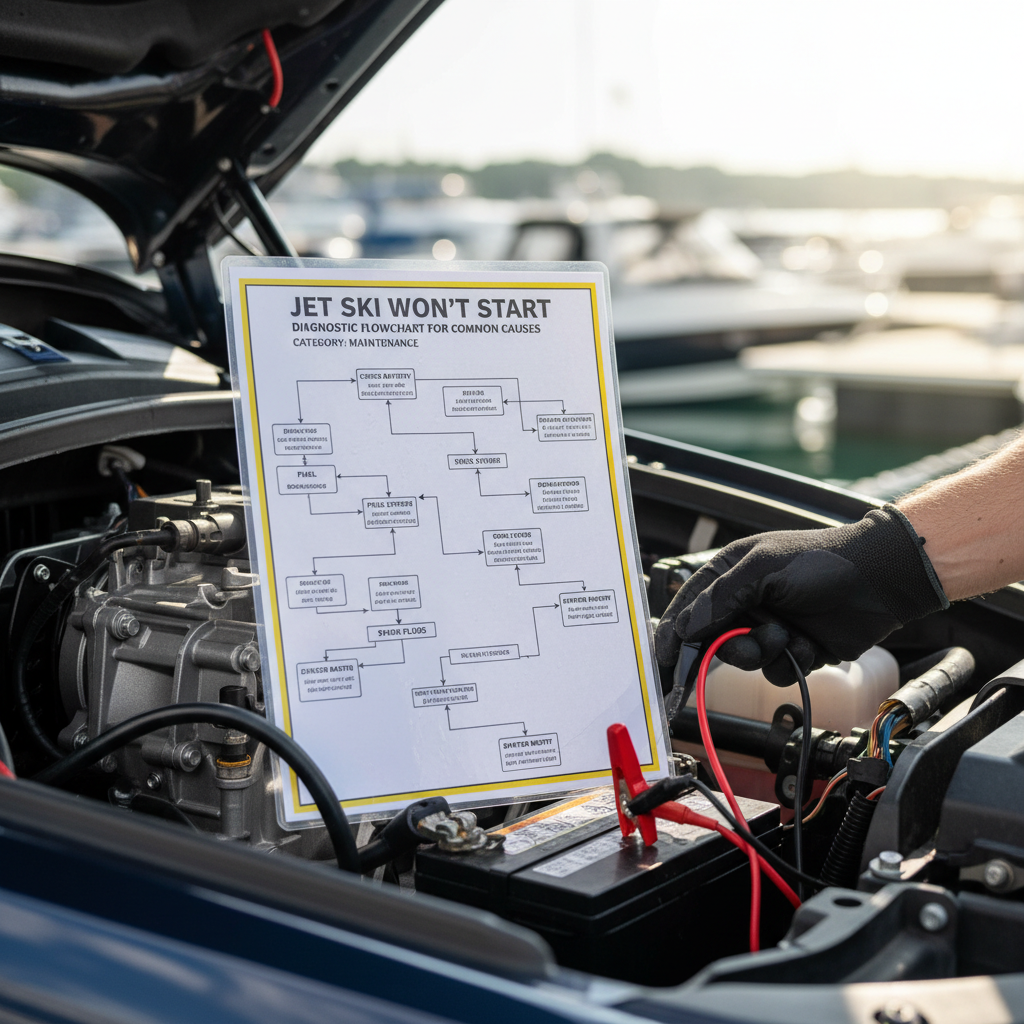
Jet Ski Won't Start: Diagnostic Flowchart for Common Causes
Frustrated by a jet ski that won't start? Our expert diagnostic flowchart helps you troubleshoot common causes, from simple fixes like the kill switch to complex electrical and fuel system issues.
Ready to Find Your Perfect Jet Ski?
Browse thousands of listings from trusted dealers nationwide