
Jet Ski Hull Repair: Fiberglass Damage, Cracks, and Costs
Learn everything about jet ski hull repair in our complete guide. We cover identifying damage, DIY vs. professional repair, and a full breakdown of 2026 costs.
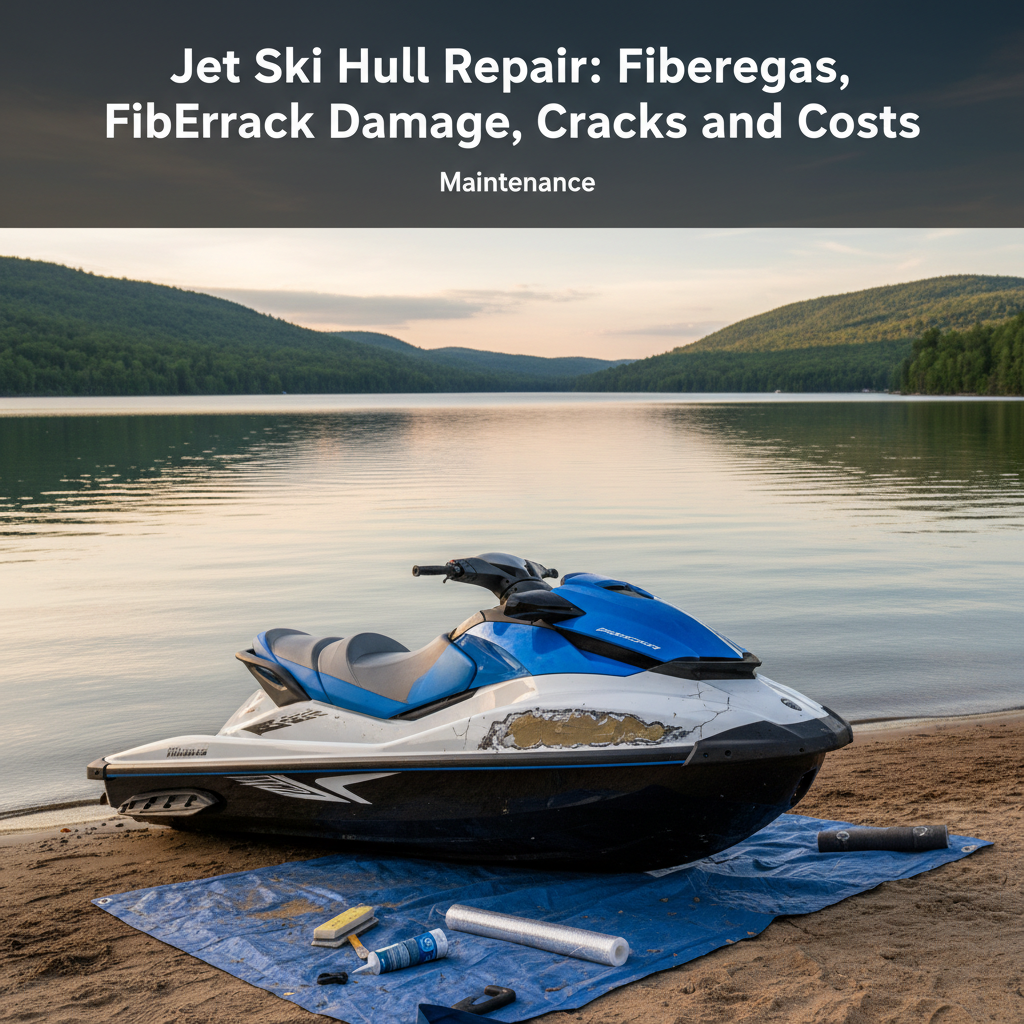
Jet Ski Hull Repair: A Complete Guide to Fiberglass Damage, Cracks, and Costs
There's nothing quite like the thrill of skimming across the water on your personal watercraft (PWC). But that excitement can quickly turn to concern when you discover a new scratch, crack, or gouge in your hull. Whether it's from an accidental bump at the dock or unseen debris just below the surface, hull damage is a reality for many owners. This comprehensive guide will walk you through everything you need to know about jet ski hull repair, from identifying the type of damage to understanding the costs involved. You'll learn when a DIY fix is appropriate and when it's time to call in a professional, ensuring your watercraft stays safe, seaworthy, and ready for your next adventure.
Identifying Common Types of Jet Ski Hull Damage
Before you can fix the problem, you need to understand its severity. Hull damage on a PWC can range from purely cosmetic blemishes to serious structural issues that compromise the integrity and safety of your machine. A thorough inspection is the first step in any repair process. Start by cleaning the hull completely to ensure you can see every detail. Pay close attention to the keel, chines (the sharp edges on the side of the hull), and the area around the pump intake. These high-impact zones are often the first to show wear and tear. It's helpful to look at pristine models on our featured jet ski listings to get a baseline for what a perfect hull should look like.
Scratches, Gouges, and 'Beach Rash'
These are the most common types of hull damage and are often cosmetic. 'Beach rash' refers to a collection of light scratches on the keel and bottom of the hull caused by repeatedly running the PWC onto a sandy or gravelly shore. While it looks unsightly, it's usually not a structural concern. Deeper scratches and gouges, however, can be more serious. A key indicator is whether the damage has penetrated the outer gelcoat layer and exposed the underlying fiberglass laminate. If you can see the fibrous texture of the fiberglass, the damage is more than just cosmetic and needs to be sealed to prevent water intrusion into the hull's core.
Stress Cracks vs. Impact Cracks
Distinguishing between stress cracks and impact cracks is crucial. Stress cracks are typically fine, web-like cracks in the gelcoat, often appearing around fittings, corners, or areas of high flex. While they can be a sign of underlying structural flexing, they are often just in the brittle gelcoat layer. Impact cracks, on the other hand, are caused by a direct, sharp blow to the hull. They often radiate out from a central point of impact and are much more likely to indicate damage to the fiberglass structure beneath. Any crack that appears to go through the fiberglass itself is a serious safety concern and requires immediate professional attention before the PWC is used again.
The DIY Approach: When Can You Repair a PWC Hull Yourself?
For the handy owner, tackling minor cosmetic damage can be a rewarding and cost-effective project. If you're dealing with light scratches, small chips in the gelcoat, or 'beach rash' that hasn't penetrated the fiberglass, a DIY jet ski hull repair is often feasible. The key is to be honest about your skill level and the extent of the damage. Attempting a structural repair without the proper knowledge can lead to a failed patch, water intrusion, and a much more expensive professional fix down the line. It's a different world from simple engine maintenance. For minor cosmetic work, however, you can achieve excellent results with the right materials and a bit of patience.
If you're ready to tackle a small repair, you'll need a specific set of tools and materials to do the job right. Using automotive products is a common mistake; you must use marine-grade materials designed to withstand the harsh aquatic environment. Here's a basic list of what you'll need:
- Color-Matched Marine Gelcoat Paste: This is essential for a seamless finish. You can often find kits specific to your PWC's model year.
- Marine-Grade Epoxy or Polyester Resin: For filling deeper gouges that have reached the fiberglass.
- Fiberglass Cloth: Only needed if you are repairing a small puncture or breach in the fiberglass itself.
- Acetone or a Dewaxing Solvent: To properly clean and prep the surface for adhesion.
- Assorted Grits of Wet/Dry Sandpaper: From 80-grit for shaping filler to 2000-grit for final polishing.
- Buffing and Polishing Compounds: To restore the shine to the repaired area.
- Safety Gear: Always wear a respirator, safety glasses, and chemical-resistant gloves.
The basic process involves cleaning the area thoroughly, grinding or sanding out the damaged material to create a clean bonding surface, filling the void with the appropriate resin or gelcoat paste, and then painstakingly sanding and buffing the area to blend it with the surrounding hull. For more detailed tutorials, be sure to check our latest jet ski news and guides for in-depth maintenance articles.
Professional Jet Ski Hull Repair: When to Call the Experts
Knowing your limits is the most important part of PWC maintenance. While DIY is great for cosmetics, certain jobs absolutely require a professional fiberglass technician. If you see any signs of major structural damage, such as large cracks, punctures, delamination (where the fiberglass layers are separating), or soft spots in the hull, it's time to put the tools down and make a call. These issues can compromise the vessel's buoyancy and structural integrity, making it extremely dangerous to operate. A professional has the experience to assess the full extent of the damage, which may not be visible from the outside. For instance, a hard impact can crack the hull and also damage the internal stringers or bulkheads that form the craft's skeleton.
Understanding the Professional Repair Process
When you take your PWC to a reputable shop for a significant jet ski hull repair, the process is far more involved than a simple patch. A technician will start by grinding away all the damaged material, often extending well beyond the visible crack to reach solid, untainted fiberglass. They then rebuild the area layer by layer with new fiberglass cloth and resin, ensuring the patch is as strong as, or even stronger than, the original hull. The final stages involve applying filler to fair the surface perfectly smooth, priming, and then spraying multiple layers of color-matched gelcoat for a factory-quality finish. This level of work requires a controlled environment and specialized equipment that the average owner simply doesn't have. When shopping for used watercraft, like the many jet skis for sale in North Carolina, always ask about past hull repairs and look for signs of professional work.
Estimating Jet Ski Hull Repair Costs in 2026
The cost of repairing a jet ski hull can vary dramatically based on the severity of the damage, your geographic location, and the specific model. As of 2026, you can expect to pay within certain ranges for professional work. A minor gelcoat scratch or chip repair might cost between $200 and $450. For deeper gouges that require filler and more extensive blending, the price can climb to $500 to $900. When it comes to structural cracks, the cost increases significantly. A small, non-complex crack repair could start around $700 and go up to $1,500. For major damage, such as a large hole or extensive delamination from an impact, repairs can easily cost $2,500 to $5,000 or more. Some advanced hulls, like those on high-performance Yamaha WaveRunners, can be more complex to repair. At a certain point, particularly for older models, the repair cost may approach the value of the PWC itself. In these cases, it might be more economical to explore replacement options. You can use our jet ski financing calculator to see how a new or newer-used model fits into your budget. This is especially true when you find great deals on units like the ones available for jet skis for sale in Texas.
Prevention: The Best Way to Avoid Costly Hull Repairs
The most affordable jet ski hull repair is the one you never have to make. Practicing preventative care is the best way to protect your investment and keep your hull in pristine condition. Always be mindful when approaching docks or other watercraft, using bumpers whenever possible. Avoid beaching your PWC on rough or unknown shorelines; it's better to anchor in shallow water and wade in. One of the best investments you can make is a keel guard. This is a durable, self-adhesive strip that protects the most vulnerable part of your hull from abrasion. Regular inspection is also key. Before every ride, do a quick walk-around to look for any new dings or scratches. Proper trailering is also important, ensuring the hull is supported correctly on the bunks to avoid creating stress points during transport. By being proactive, you can prevent most common hull issues and enjoy more worry-free time on the water. Some modern hulls, like the Polytec material on many Sea-Doo personal watercraft, are more scratch-resistant but still require care to avoid deep gouges or cracks.
Ultimately, the condition of your hull is directly tied to the safety and value of your jet ski. Addressing damage promptly, whether it's a small DIY touch-up or a major professional job, is non-negotiable. If you're facing a costly repair on an older model, it may be the perfect time to upgrade. At JetSportsTrader, we have the largest selection of new and used personal watercraft in the country. Take the next step in your PWC journey and browse jet skis for sale today to find your perfect ride.
Frequently Asked Questions
How much does it cost to fix a crack in a jet ski hull?
The cost to fix a crack in a jet ski hull varies widely based on its size, location, and severity. For a small, non-structural stress crack in the gelcoat, you might pay a professional $400 to $800. However, for a larger, structural impact crack that requires fiberglass work, the cost for a professional jet ski hull repair can range from $700 to over $2,000 in 2026, depending on the complexity.
Can you ride a jet ski with a cracked hull?
It is extremely dangerous and highly discouraged to ride a jet ski with a cracked hull. Even a small crack can allow water to enter the hull, potentially compromising the craft's buoyancy, damaging internal components, and leading to catastrophic failure on the water. Any crack that has penetrated the fiberglass should be considered a critical safety issue that needs immediate repair before the PWC is used again.
Is it hard to repair a fiberglass jet ski hull?
Repairing minor cosmetic damage like light scratches or small gelcoat chips is a manageable DIY project for a careful and patient owner. However, repairing structural damage, such as deep gouges, cracks, or punctures in the fiberglass, is significantly more difficult. It requires specialized knowledge of materials, proper preparation techniques, and finishing skills to ensure a safe and durable repair. For anything beyond surface-level blemishes, a professional repair is strongly recommended.
Ready to buy or sell? Explore the jet ski marketplace, jet ski valuation calculator, or sell your jet ski at Jet Sports Trader.
Related Articles

Supercharger Rebuilds on Performance Jet Skis: Timing and Cost
Learn the critical timing and costs for a jet ski supercharger rebuild. Our 2026 guide covers warning signs and DIY vs. pro costs to prevent catastrophic engine failure.

Jet Ski Overheating: Causes, Warning Signs, and Emergency Fixes
A jet ski overheating issue can ruin your day and your engine. Learn the common causes, critical warning signs, and on-the-water fixes to keep your PWC running cool and reliably all season long.

Jet Ski Won't Start: Diagnostic Flowchart for Common Causes
Frustrated by a jet ski that won't start? Our expert diagnostic flowchart helps you troubleshoot common causes, from simple fixes like the kill switch to complex electrical and fuel system issues.
Ready to Find Your Perfect Jet Ski?
Browse thousands of listings from trusted dealers nationwide