
Jet Ski Overheating: Causes, Warning Signs, and Emergency Fixes
A jet ski overheating issue can ruin your day and your engine. Learn the common causes, critical warning signs, and on-the-water fixes to keep your PWC running cool and reliably all season long.
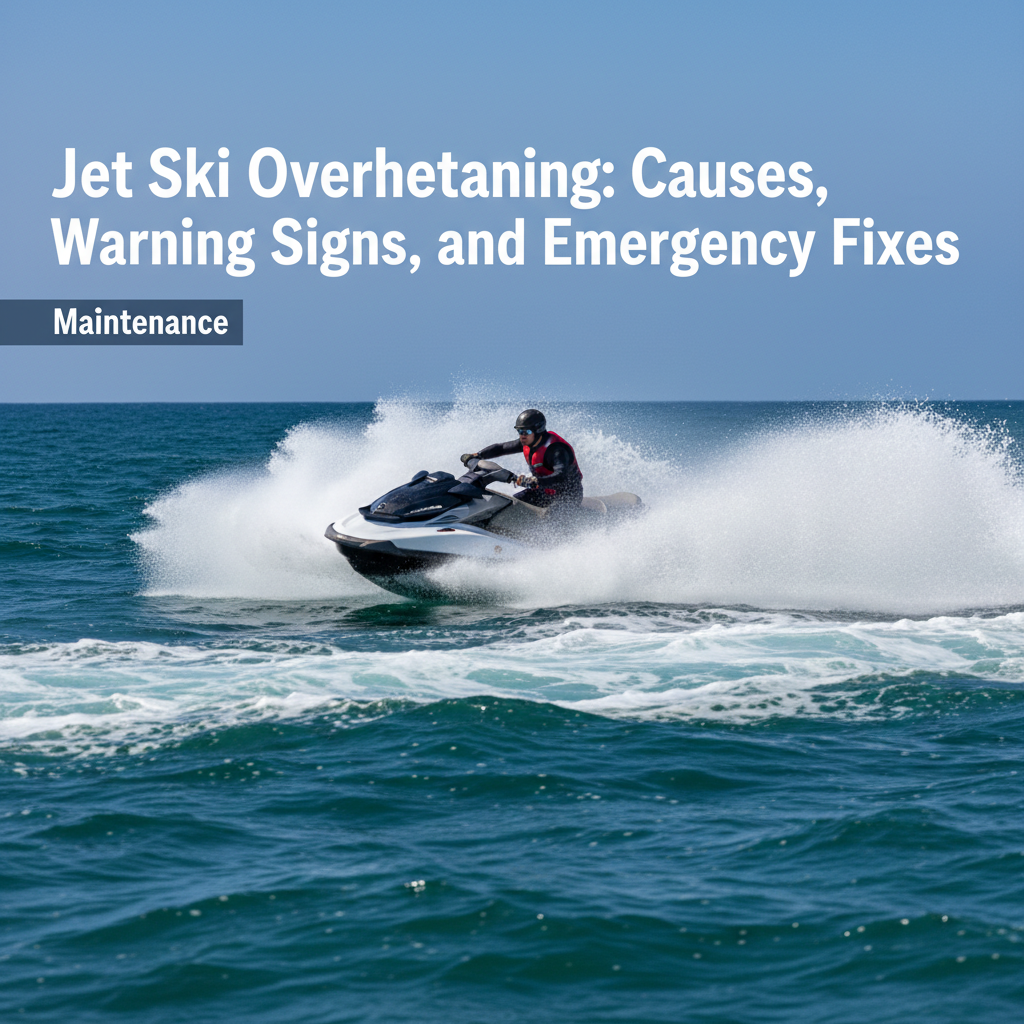
Jet Ski Overheating: Causes, Warning Signs, and Emergency Fixes
There's nothing quite like the thrill of skimming across the water on a personal watercraft (PWC). But that excitement can quickly turn to panic if your dashboard lights up with a high-temperature warning. A jet ski overheating issue is one of the most common and potentially damaging problems a rider can face. Ignoring it can lead to catastrophic engine failure and costly repairs. This guide will walk you through the critical warning signs, the most frequent causes, and what you can do on the water to manage the situation, ensuring you can get back to shore safely. Understanding your PWC's cooling system is the first step toward preventing and addressing these problems effectively.
Understanding Your Jet Ski's Cooling System
Before you can diagnose an overheating problem, you need a basic understanding of how your jet ski cools its powerful engine. Unlike a car, which uses a radiator and fan, most PWCs use the very water they ride on. There are two primary types of cooling systems found in modern personal watercraft, and knowing which one your model has is crucial for proper maintenance and troubleshooting. You can often find this information in your owner's manual or by checking our complete jet ski model directory for your specific PWC's specifications.
Open-Loop Cooling Systems: The Most Common Type
The vast majority of jet skis, including many popular Sea-Doo, Yamaha, and Kawasaki models, use an open-loop cooling system. This system is brilliantly simple: it draws in lake, river, or ocean water through an intake grate on the bottom of the hull. This water is then circulated through designated passages and jackets around the engine and exhaust components to absorb heat. After it has done its job, the now-warmed water is expelled back out of the PWC, typically through a dedicated port. The constant flow of cool, raw water keeps the engine operating at its optimal temperature. While efficient and simple, this design is highly susceptible to clogs from debris like sand, seaweed, or small pebbles.
Closed-Loop Cooling Systems: The Premium Choice
Found primarily on select Sea-Doo models and some high-end Kawasaki Ultras, a closed-loop cooling system functions more like a car's radiator. It uses a self-contained coolant mixture that circulates through the engine to absorb heat. This heated coolant is then pumped through a special ride plate on the bottom of the hull. The ride plate acts as a heat exchanger, using the cool water the PWC is riding on to cool the internal coolant, without ever letting the raw water enter the engine. This system is superior for protecting the engine from corrosion and debris, making it a popular choice for saltwater riders or those in debris-heavy areas like the lakes of Michigan. If you're looking for a PWC with this feature, you can browse a wide selection of jet skis for sale in Michigan to find the perfect model.
Top 5 Causes of Jet Ski Overheating Issues
When a jet ski's temperature gauge starts to climb, it's almost always due to a disruption in the cooling system's ability to circulate water. Identifying the root cause is key to a quick and effective fix. Here are the most common culprits behind a jet ski overheating problem.
1. Clogged Intake Grate or Jet Pump
This is, by far, the most frequent cause of overheating, especially for open-loop systems. Your jet ski's intake grate acts as the first line of defense, but it can easily become clogged with seaweed, plastic bags, rope, or other debris. When this happens, the flow of cooling water is restricted or completely cut off, causing the engine temperature to rise rapidly. Riding in shallow, weedy, or debris-filled water significantly increases this risk. Always be mindful of your surroundings to avoid sucking up potential blockages.
2. Blocked or Damaged Cooling Lines
Even if the intake grate is clear, debris can make its way further into the system. Sand, silt, small shells, and fragments of vegetation can get lodged inside the small cooling lines and passages that run through the engine and exhaust manifold. Over time, this buildup can create a significant blockage. In saltwater environments, salt crystallization can also form inside the lines if the system isn't flushed properly after each use, leading to a gradual and dangerous restriction of water flow. This is a critical consideration for riders looking at jet skis for sale in North Carolina and other coastal areas.
Another common issue is a kinked, pinched, or disconnected hose. During maintenance or even from heavy vibration, a cooling line can become dislodged or bent, stopping water flow just as effectively as a clog. A quick visual inspection of the engine bay can often reveal such a problem. When considering used jet skis for sale, always inspect these hoses for signs of wear, cracking, or improper routing.
3. Thermostat Failure
Just like in a car, some jet skis are equipped with a thermostat that regulates engine temperature by controlling coolant flow. If the thermostat gets stuck in the closed position, it will prevent cooling water from circulating through the engine, leading to a rapid overheat condition. This is a mechanical failure that typically requires replacement of the part. While less common than debris clogs, it's a potential point of failure that should be considered, especially on older models.
4. Low Engine Oil or Coolant Levels
While the water provides the primary cooling, engine oil plays a vital secondary role in dissipating heat. Running your PWC with low engine oil can cause increased friction and higher operating temperatures, contributing to an overheating situation. For closed-loop systems, low coolant is a direct cause of overheating. A leak in the system can deplete the coolant level, leaving the engine without its primary method of heat exchange. Always check your oil and coolant levels as part of your pre-ride inspection.
5. Faulty Sensor or Gauge
Sometimes, the engine isn't actually overheating at all. A faulty temperature sensor or a malfunctioning gauge on your dashboard can give a false warning. While this is the best-case scenario for a jet ski overheating alarm, you should never assume it's a false alarm without proper diagnosis. If you receive a warning but don't notice other symptoms like steam or a loss of power, it's worth investigating the sensor and wiring once you are safely back on shore. A trusted mechanic can help diagnose these electrical gremlins; you can find trusted dealers near you for professional service.
Recognizing the Warning Signs of an Overheating PWC
Your jet ski will usually give you several clear signals that its temperature is climbing to dangerous levels. Acting on the first sign is critical to prevent engine damage. Pay attention to these warnings:
- Dashboard Warning Light or Alarm: This is the most obvious sign. Modern PWCs have sophisticated warning systems that include a dedicated high-temp light and an audible alarm. Never ignore these warnings.
- 'Limp Mode' Activation: Most modern jet skis will automatically enter a 'limp mode' or 'guardian mode' when a serious fault like overheating is detected. This mode drastically reduces engine RPM to protect it from damage, allowing you to slowly 'limp' back to the dock.
- Steam from the Engine Compartment: If you see steam or smoke coming from under the seat, it's a definitive sign of a severe overheat. Shut down the engine immediately.
- Noticeable Loss of Power: Before limp mode even kicks in, you might feel the PWC becoming sluggish or less responsive. This can be an early indicator that the engine is struggling due to excessive heat.
- A 'Hot' Smell: An overheating engine can produce a distinct smell, similar to burning plastic or oil. If you smell something unusual, it's time to investigate.
Emergency On-the-Water Fixes for an Overheating Engine
If you experience a jet ski overheating issue on the water, your first priority is to shut off the engine to prevent damage. Do not try to push through it. Once the engine is off, you can attempt some basic troubleshooting.
First, perform a visual inspection. If you are in safe, shallow water, carefully check the intake grate on the bottom of the hull for any visible blockages like seaweed or a plastic bag. If you can safely reach it, try to clear the debris. Sometimes, rocking the PWC or a few quick bursts in reverse (if your model has it) can dislodge minor debris. If you cannot see a clog, lift the seat and visually inspect the engine bay for a disconnected or kinked cooling hose. If a hose has popped off, and you can safely reattach it, do so. Allow the engine to cool for at least 15-20 minutes before attempting to restart it. If it starts without an immediate alarm, proceed slowly back to shore, keeping a close eye on the temperature gauge. If the alarm returns, shut it down and signal for a tow.
Preventative Maintenance: Your Best Defense Against Overheating
The best way to deal with a jet ski overheating problem is to prevent it from ever happening. Regular maintenance is key, especially in hot climates like those where you'd find jet skis for sale in Arizona. Follow a strict pre-ride and post-ride checklist. Before every ride, check your engine oil and coolant (if applicable). After every single ride, especially in salt or brackish water, you must flush the cooling system with fresh water using the designated flush port. This 5-minute procedure is the single most important thing you can do to prevent internal corrosion and debris buildup. Regularly inspect cooling lines for cracks, brittleness, or loose clamps. By being proactive, you can ensure your PWC's cooling system is ready for a full season of fun. If you're in the market for a new craft, our jet ski buying guide provides more tips on what to inspect. Ultimately, a well-maintained watercraft is a reliable one, giving you peace of mind on the water. Should the time come for an upgrade, browse the best personal watercraft for sale on JetSportsTrader.com.
Frequently Asked Questions About Jet Ski Overheating
How hot is too hot for a jet ski engine?
Most PWC engines are designed to operate in a range of 160-180 degrees Fahrenheit (71-82 Celsius). The overheat alarm on most models for the 2026 season is typically set to trigger around 195-205 degrees Fahrenheit (90-96 Celsius). Running an engine above this temperature for even a short period can cause serious damage to internal components like pistons, gaskets, and seals. If your alarm goes off, you are already in the danger zone.
Can I still ride my jet ski if the overheat alarm goes off?
No, you should not continue to ride your jet ski at speed if the overheat alarm activates. Continuing to run the engine will likely lead to severe, and very expensive, engine damage. Most modern PWCs will automatically engage a low-RPM 'limp mode' to protect the engine. Your only goal should be to shut down the engine to let it cool or, if necessary, proceed at the lowest possible speed directly back to the nearest shore or dock.
Does flushing my jet ski after every ride really prevent overheating?
Absolutely. Flushing is the most critical piece of preventative maintenance for an open-loop cooling system. It removes corrosive salt, sand, silt, and small organic matter that can become lodged in the cooling passages. Over time, this buildup restricts water flow and acts as an insulator, preventing the engine from cooling effectively. A consistent flushing routine is the best insurance against a future jet ski overheating problem.
Ready to buy or sell? Explore the jet ski marketplace, browse jet skis for sale, jet ski valuation calculator, or sell your jet ski at Jet Sports Trader.
Related Articles

Supercharger Rebuilds on Performance Jet Skis: Timing and Cost
Learn the critical timing and costs for a jet ski supercharger rebuild. Our 2026 guide covers warning signs and DIY vs. pro costs to prevent catastrophic engine failure.
Jet Ski Hull Repair: Fiberglass Damage, Cracks, and Costs
Learn everything about jet ski hull repair in our complete guide. We cover identifying damage, DIY vs. professional repair, and a full breakdown of 2026 costs.
Jet Ski Won't Start: Diagnostic Flowchart for Common Causes
Frustrated by a jet ski that won't start? Our expert diagnostic flowchart helps you troubleshoot common causes, from simple fixes like the kill switch to complex electrical and fuel system issues.
Ready to Find Your Perfect Jet Ski?
Browse thousands of listings from trusted dealers nationwide