
Jet Ski Trailer Bearings: Grease, Maintenance & Emergency Fixes
Don't let a breakdown ruin your day. Our expert guide covers everything about jet ski trailer bearings, from grease and maintenance to emergency roadside fixes.
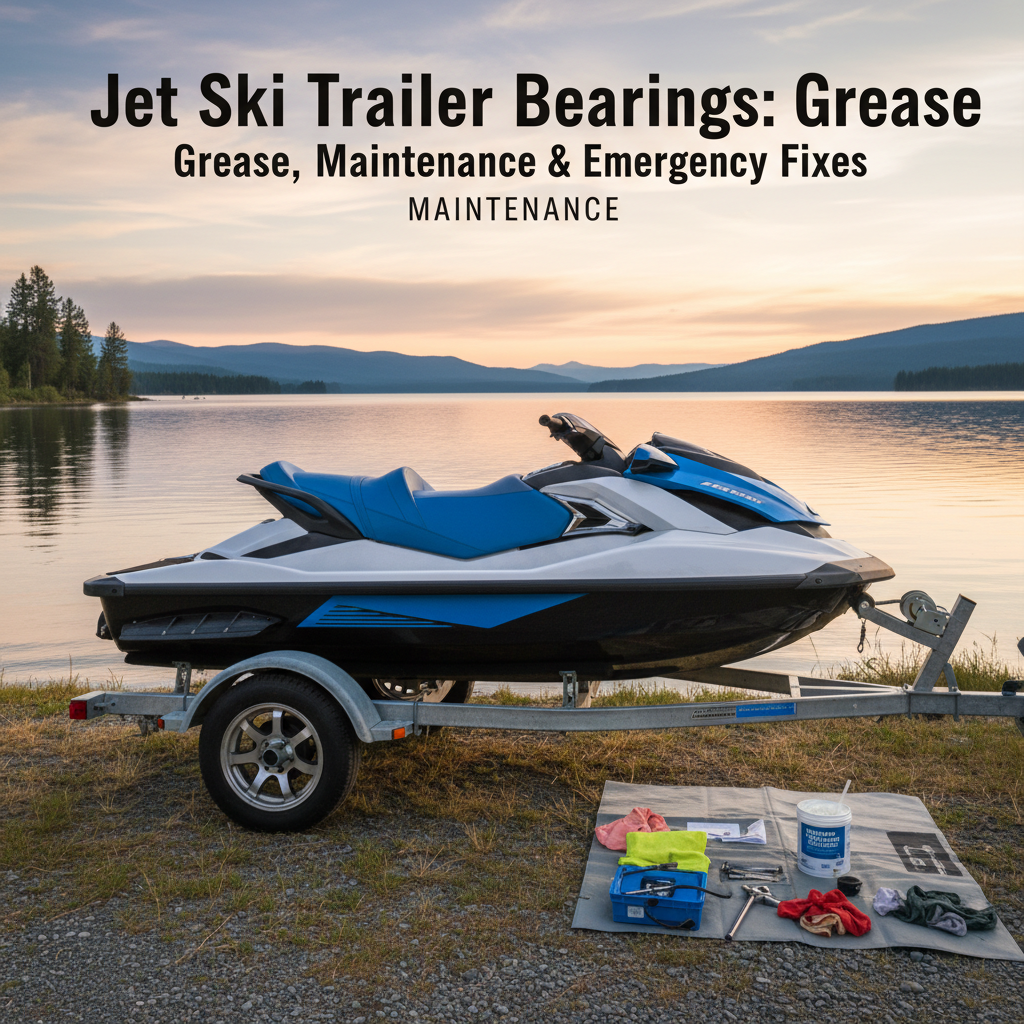
Jet Ski Trailer Bearings: Grease, Maintenance & Emergency Fixes
The thrill of hitting the water on your jet ski is an unmatched experience. But before the fun begins, there's the journey. The unsung hero of that journey is your trailer, and its most critical components are the jet ski trailer bearings. Neglecting these small but mighty parts can lead to a disastrous roadside breakdown, ruining your day and potentially causing costly damage. This comprehensive guide will teach you everything you need to know about proper grease selection, routine maintenance, and even emergency roadside fixes to keep you rolling safely all season long.
Understanding how to care for your trailer's wheel hub assembly is just as important as winterizing your PWC. It's a fundamental aspect of ownership that ensures safety and longevity for your equipment. Whether you're hauling a brand new Sea-Doo personal watercraft or a trusted Yamaha WaveRunner, the principles of bearing care remain the same. Let's dive into the essentials of keeping your trailer's wheels spinning smoothly.
Why Your PWC Trailer Bearings Are So Critical
At their core, wheel bearings are simple: they are sets of steel balls or rollers held in a ring, designed to reduce friction and allow your trailer's wheels to rotate freely. However, the environment they operate in is anything but simple. When you launch your jet ski, the hot hub assembly from highway travel is suddenly submerged in cool water. This rapid temperature change creates a vacuum effect, which can suck water and contaminants past the seals and directly into the bearing grease.
This water intrusion is the primary enemy of your jet ski trailer bearings. Water displaces the lubricating grease and initiates corrosion on the precision-machined surfaces of the bearings and races. Add saltwater to the mix, a common scenario for those enjoying the coastlines with jet skis for sale in Florida, and the corrosive process accelerates dramatically. Over time, this leads to pitting, increased friction, and eventual catastrophic failure. A failed bearing can cause a wheel to seize or even detach from the axle completely while you're driving, a truly dangerous situation.
Choosing the Right Grease for Your Trailer Bearings
Not all grease is created equal, and using the wrong type is nearly as bad as using no grease at all. The unique demands of a boat or PWC trailer, specifically the constant exposure to water, require a specialized lubricant. Selecting the correct grease is the first and most important step in proper maintenance.
Marine Grade vs. General Purpose Grease
The number one rule is to always use a high quality, marine grade grease. Standard automotive grease is designed to handle high temperatures and pressure but lacks the water washout resistance needed for trailer applications. Marine grease is formulated with special additives that allow it to repel water and maintain its lubricating properties even after being submerged. It creates a protective barrier that general purpose grease simply cannot provide, making it essential for protecting your investment.
Understanding Grease Specifications: NLGI Grade and Base Oil
When selecting a marine grease, you'll often see an 'NLGI' number. This stands for the National Lubricating Grease Institute, and the number represents the grease's consistency. For trailer bearings, an NLGI Grade 2 grease is the industry standard. It offers the perfect balance of thickness to stay in place while still being fluid enough to lubricate effectively. You should also look for a grease with a calcium sulfonate or aluminum complex thickener, as these are known for their excellent water resistance and corrosion protection, making them ideal for the harsh marine environment.
A Step-by-Step Guide to Greasing Your Jet Ski Trailer Bearings
Regularly adding fresh grease to your hubs pushes out any water or old, contaminated grease, significantly extending bearing life. For the 2026 season and beyond, aim to check and add grease every few trips or at least once a month. Here's a simple process for hubs equipped with spring-loaded bearing protectors or zerk fittings:
- Clean the Fitting: Before you attach your grease gun, wipe the zerk fitting or the cap of the bearing protector clean. This prevents you from forcing dirt or grit directly into the hub assembly.
- Attach the Grease Gun: Firmly connect the coupler of your grease gun to the fitting. Ensure you have a good, tight seal to prevent grease from leaking out the sides.
- Pump Slowly: Begin pumping grease into the hub slowly and deliberately. If you have spring-loaded protectors, you will see the inner piston begin to move outward as the hub fills with grease.
- Know When to Stop: For spring-loaded protectors, stop pumping when the piston begins to rock or tilt slightly. This indicates the hub is full. For standard zerk fittings without a spring indicator, pump until you feel firm resistance. Do not overfill, as excessive pressure can blow out the rear seal, creating a path for water to enter and grease to escape onto your brakes.
- Clean Up: Once finished, remove the grease gun and wipe away any excess grease from the fitting and hub. This keeps things tidy and makes it easier to spot potential leaks in the future.
This simple 5-minute check is one of the most effective preventative maintenance tasks you can perform. It's a small time investment that prevents major headaches down the road. If you're inspecting used jet skis for sale, always make checking the trailer's hubs part of your pre-purchase inspection.
Recognizing the Signs of Failing Trailer Bearings
Even with diligent maintenance, bearings are wear items and will eventually need replacement. Being able to recognize the early warning signs of failure can help you address the issue before it leaves you stranded. Pay attention to these key indicators.
The first sign is often auditory. You might hear a grinding, rumbling, or squealing noise coming from the wheel area while driving. This sound will typically change with speed, becoming louder or higher pitched as you accelerate. Another critical check is to feel the hub temperature. After a drive of 15-20 minutes, carefully touch each hub. They should be warm to the touch, but if one is significantly hotter than the others, it's a red flag for excessive friction and a failing bearing.
A visual inspection can also reveal problems. Look for grease splattered on the inside of the wheel or on the trailer frame. This is a classic sign of a failed rear seal. Finally, perform a physical check. With the trailer safely supported on a jack stand, grab the tire at the top and bottom and try to wiggle it. Any significant play, looseness, or 'clunking' sensation indicates that your jet ski trailer bearings are worn and require immediate replacement.
Emergency Roadside Fixes for a Failed Bearing
Discovering a failed bearing on the side of the highway is a stressful situation, especially if you're far from home or a service center. While a permanent repair requires new parts and proper tools, there are temporary measures you can take to limp to a safer location. The first priority is safety. Pull over as far as possible and use hazard lights and safety triangles.
If the bearing has seized but the wheel is still attached, your options are limited. You may need to call for a tow. However, if the bearing has just started to make noise or get very hot, you might be able to attempt a temporary fix. If you carry a spare hub kit, which is highly recommended, you can perform a full replacement on the roadside. If not, you can try to pack the damaged bearing with as much fresh grease as possible. This is a very temporary solution that might buy you a few slow miles to the nearest auto parts store or service station. Driving at a greatly reduced speed, under 30 mph, is crucial to prevent further damage or a complete wheel separation. Trailering a heavy Kawasaki jet ski across the hot desert to find jet skis for sale in Nevada is no time to discover a bearing issue, so preparation is key.
Frequently Asked Questions About Jet Ski Trailer Bearings
How often should I grease my jet ski trailer bearings?
A good rule of thumb is to add a few pumps of marine grease every 3-4 trips to the water, or at least once a month during the boating season. It's also critical to check them before the first trip of the year and before any long-distance haul. This simple act purges any water that may have entered the hub.
Can I mix different types of trailer grease?
It is strongly advised not to mix different types of grease. Greases use different 'thickeners' (like lithium, aluminum, or calcium sulfonate), and mixing them can cause the chemical structure to break down, leading to oil separation and a complete loss of lubrication. If you don't know what grease is currently in your hubs, it's best to completely clean and repack the bearings with a new, high quality marine grease.
What's the difference between a Bearing Buddy and a standard dust cap?
A standard dust cap simply covers the hub to keep dirt out. A Bearing Buddy, or similar spring-loaded protector, replaces the dust cap and has a grease fitting. It contains a spring-loaded piston that maintains a slight, constant pressure inside the hub. This positive pressure helps prevent water from being drawn into the hub when it's submerged, offering a superior level of protection for your jet ski trailer bearings.
Is it difficult to replace jet ski trailer bearings myself?
Replacing trailer bearings is a moderately difficult task that requires some mechanical aptitude and specific tools, such as a jack, jack stands, a seal puller, and a bearing race driver. While many owners can do it themselves by following online tutorials, it's a dirty job that must be done correctly. If you're not comfortable with the process, it's wise to have a professional handle it. You can find trusted dealers near you who can perform this service.
Conclusion: Protect Your Investment with Proper Maintenance
Your jet ski trailer bearings are the foundation of every successful trip to the water. By understanding their importance, using the correct marine grease, and performing regular inspections and maintenance, you can prevent the vast majority of trailer-related breakdowns. Taking 15 minutes to check your hubs before a trip can save you hours of frustration on the roadside and hundreds of dollars in repairs. Keep these tips in mind, and you'll ensure that your focus remains on the fun, not on roadside failures. Ready for your next adventure? Head over to JetSportsTrader.com to browse jet skis for sale and find your perfect ride today!
Ready to buy or sell? Explore the jet ski marketplace, jet ski valuation calculator, or sell your jet ski at Jet Sports Trader.
Related Articles
DIY Jet Ski Hydro-Turf Installation: Step-by-Step Guide
Ready to upgrade your PWC? Our step-by-step guide to DIY jet ski hydro-turf installation will help you improve grip, comfort, and style with professional results.
Optimizing Jet Ski Handling: Adjusting Ride Plates & Sponsons
Unlock your PWC's full potential. Our guide to jet ski handling adjustments for ride plates and sponsons will help you master cornering and achieve ultimate stability on the water.

Jet Ski Performance Tuning: ECU Flashes, Impellers & Aftermarket Mods
Unlock your PWC's true potential. This guide to jet ski performance tuning covers ECU flashes, impellers, and aftermarket mods to boost your speed and acceleration.
Ready to Find Your Perfect Jet Ski?
Browse thousands of listings from trusted dealers nationwide