
Jet Ski Performance Tuning: ECU Flashes, Impellers & Aftermarket Mods
Unlock your PWC's true potential. This guide to jet ski performance tuning covers ECU flashes, impellers, and aftermarket mods to boost your speed and acceleration.
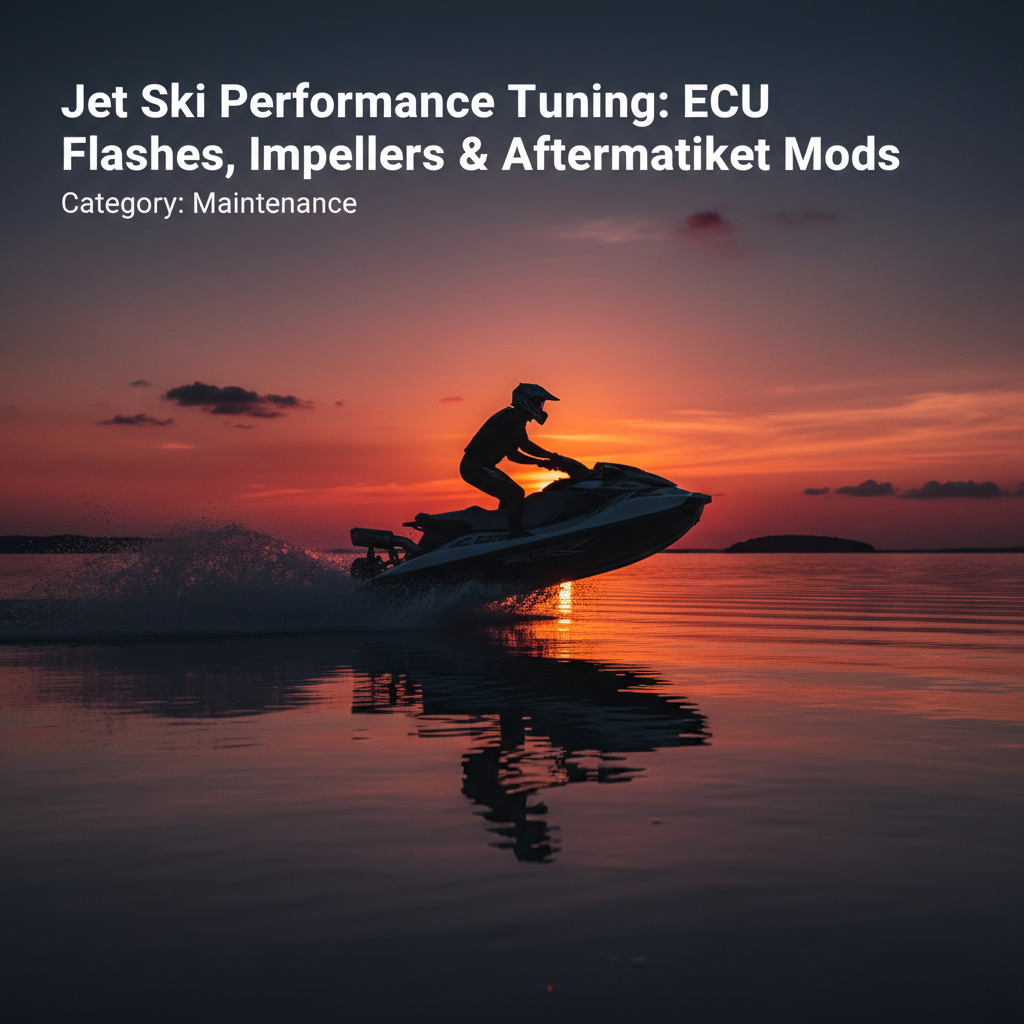
Jet Ski Performance Tuning: A Complete Guide to Speed and Power
There's nothing quite like the exhilarating rush of flying across the water on a powerful personal watercraft (PWC). While modern jet skis are incredibly capable right from the factory, manufacturers often leave a significant amount of performance on the table. If you're an enthusiast looking to unlock that hidden potential, you've come to the right place. This comprehensive guide to jet ski performance tuning will walk you through the most effective modifications, from simple bolt-on parts to advanced ECU remapping, to transform your ride.
We will explore how to safely and effectively increase your PWC's horsepower, acceleration, and top speed. You will learn about the brain of your machine, the ECU, and how flashing it can unleash incredible power. We will also dive into the critical components that transfer that power to the water, like the impeller and intake grate, ensuring your ski is a perfectly balanced machine. Whether you are a seasoned racer or a weekend warrior wanting more thrill, this guide has the expert advice you need.
Understanding the Basics: Why Tune Your Jet Ski?
You might wonder why a brand new, expensive jet ski would need tuning at all. Manufacturers design their watercraft to appeal to a broad market, balancing performance with factors like fuel efficiency, noise regulations, emissions standards, and long term reliability for the average user. This often means the engine is electronically 'detuned' from its maximum possible output. For the performance enthusiast, this creates a fantastic opportunity.
The primary goals of jet ski performance tuning are to increase horsepower and torque. This translates directly to a more exciting experience on the water, with benefits like a much quicker 'hole shot', which is the initial acceleration from a standstill. It also leads to a higher top speed and more responsive throttle control throughout the powerband. Even small, targeted upgrades can make a noticeable difference in how your PWC feels and performs, elevating your riding experience from fun to absolutely unforgettable. If you're looking for a great base model to start modifying, check out the wide range of personal watercraft for sale and find your perfect project.
The Brain of Your PWC: Unlocking Power with ECU Flashing
The single most effective performance upgrade for a modern, fuel injected jet ski is an ECU flash, also known as remapping. The Engine Control Unit (ECU) is a small computer that acts as the brain of your PWC's engine. It controls critical parameters like the air to fuel ratio, ignition timing, and, most importantly, the RPM limit. A performance ECU flash involves reprogramming this computer with new maps that are optimized for maximum power rather than compromise.
This process can instantly unlock horsepower that was restricted by the manufacturer. For supercharged models, an ECU flash can also increase the boost pressure, leading to dramatic gains. It is the foundation of any serious performance build and a crucial element of a complete jet ski performance tuning plan. Before diving into advanced modifications, it is a good idea to understand the specific capabilities of your model by checking our complete jet ski model directory.
Stage 1 vs. Stage 2+ Flashes
Performance tunes are typically offered in stages. A Stage 1 tune is designed for a completely stock machine. It adjusts the software parameters to optimize performance without requiring any hardware changes, making it the best 'bang for your buck' modification available. You can expect significant improvements in acceleration and top speed with just this simple software change.
Stage 2 and beyond are designed for watercraft that have supporting hardware modifications. These tunes are calibrated to take advantage of components like aftermarket air intakes, exhaust systems, and upgraded supercharger wheels. While they offer much higher power gains, they require a greater investment in parts and labor. Choosing the right stage depends entirely on your goals and budget.
Getting Hooked Up: The Critical Role of the Impeller
Adding horsepower is only half the battle. If you cannot effectively transfer that newfound power to the water, it is completely wasted. This is where the impeller comes in. The impeller is a rotor inside the jet pump that pressurizes and accelerates water to create thrust. Think of it as the propeller of your jet ski, or the tires on a race car. An upgraded impeller is essential for any tuned PWC to prevent a phenomenon called cavitation, where the impeller spins too fast and boils the water, losing grip.
Aftermarket impellers are designed with different blade shapes and pitches to better match a modified engine's power curve. A performance impeller provides better 'hook up', grabbing more water to improve both initial acceleration and top end speed. It ensures that every bit of horsepower your tuned engine produces is translated into forward momentum. This is a non negotiable upgrade for skis with Stage 2 or higher tunes. Many riders in high performance markets like Florida consider this their second mod right after an ECU flash, which you can see on many of the jet skis for sale in Florida listed on our site.
Choosing the Right Impeller Pitch
Impellers are defined by their pitch, which is a measurement of how far the PWC would move forward in one revolution if there were no slip. A lower pitch impeller acts like a lower gear in a car, providing explosive acceleration and a better hole shot. This is ideal for closed course racing or riders who value quickness over outright top speed. A higher pitch impeller is like a higher gear, allowing the ski to achieve a greater top speed, but it may feel slightly slower off the line. It requires more engine horsepower to turn effectively. The key is to match the impeller pitch to your engine's output and your primary riding style for a balanced setup.
Breathing Easy: Intake and Exhaust Aftermarket Mods
Like any internal combustion engine, a jet ski's engine is essentially an air pump. The more air it can move in and out, the more power it can generate. This is why upgrading the intake and exhaust systems is a popular step in the jet ski performance tuning process, especially when moving to a Stage 2 tune.
- Air Intake Kits: Stock air intake systems are often designed to be quiet and can be restrictive. An aftermarket free flow air intake kit replaces the stock airbox with a high flow filter and tube, allowing the engine to breathe in more cool, dense air. This simple mod can add a few horsepower and improve throttle response.
- Intake Grates: An aftermarket intake grate sits underneath the hull where water enters the jet pump. It features a 'top loader' design that forces more water into the pump, especially in choppy conditions. This improves hook up and reduces cavitation, keeping the pump loaded for maximum drive.
- Exhaust Systems: A free flowing exhaust system reduces backpressure, allowing exhaust gases to exit the engine more efficiently. This helps the engine produce more power and also gives the PWC a much more aggressive and satisfying sound. This modification almost always requires a corresponding ECU tune to adjust fueling for the change in airflow.
Combining these breathing mods is what allows a Stage 2 or higher tune to deliver its full potential. To see what's available near you, consider looking through the jet skis for sale in North Carolina to find a great starting point.
Putting It All Together: A Balanced Approach to Tuning
The key to successful and reliable tuning is creating a balanced package where all components work in harmony. Simply adding a massive supercharger without upgrading the impeller and ECU will result in poor performance and potential engine damage. A well thought out approach, even for the advanced 2026 models, ensures you get the most out of your investment.
For beginners, the path is clear. Start with a Stage 1 ECU flash and perhaps an upgraded intake grate. This provides the best value and a major performance boost with minimal investment and complexity. From there, you can progress to a full Stage 2 package with an intake, impeller, and exhaust as your confidence and budget grow. Always prioritize quality parts from reputable brands to ensure reliability. And before you buy, our jet ski buying guide can help you choose the right platform for your goals.
Proper maintenance becomes even more critical on a tuned watercraft. More frequent oil changes and careful inspection of components are essential. But the reward is a PWC that offers a level of performance and excitement far beyond what the manufacturer intended. Ready to find the perfect PWC to start your tuning journey? Browse jet skis for sale on JetSportsTrader.com today, and check out our newly listed jet skis for the latest deals. For more tips, visit our section with the latest jet ski news and guides.
Frequently Asked Questions
How much horsepower can you add to a jet ski?
The amount of horsepower you can add depends heavily on the specific PWC model and your budget. A simple Stage 1 ECU flash on a supercharged model can add 15 to 30 horsepower. A fully built, Stage 3+ race ski with an upgraded supercharger, intercooler, and internal engine work can add over 150 horsepower compared to its stock configuration, pushing output well over 450 HP in some cases.
Will performance tuning void my jet ski's warranty?
In almost all cases, yes. Modifying the ECU or installing major aftermarket performance parts like an exhaust or supercharger upgrade will void your manufacturer's warranty, particularly for the engine and driveline. Some bolt on parts like sponsons or an intake grate may not, but you should always check with your dealer. This is a critical consideration when performing jet ski performance tuning on a newer watercraft.
What is the best first performance mod for a jet ski?
For most modern jet skis, the best first performance modification is a Stage 1 ECU flash. It offers the most significant performance gain for the cost, with dramatic improvements in acceleration and top speed, without requiring any other parts. For a non supercharged or older carbureted ski, an upgraded intake grate and a new impeller are often the best starting points to improve hook up and handling.
Ready to buy or sell? Explore the jet ski marketplace, jet ski valuation calculator, or sell your jet ski at Jet Sports Trader.
Related Articles
DIY Jet Ski Hydro-Turf Installation: Step-by-Step Guide
Ready to upgrade your PWC? Our step-by-step guide to DIY jet ski hydro-turf installation will help you improve grip, comfort, and style with professional results.

Optimizing Jet Ski Handling: Adjusting Ride Plates & Sponsons
Unlock your PWC's full potential. Our guide to jet ski handling adjustments for ride plates and sponsons will help you master cornering and achieve ultimate stability on the water.
Jet Ski Trailer Bearings: Grease, Maintenance & Emergency Fixes
Don't let a breakdown ruin your day. Our expert guide covers everything about jet ski trailer bearings, from grease and maintenance to emergency roadside fixes.
Ready to Find Your Perfect Jet Ski?
Browse thousands of listings from trusted dealers nationwide