
Night Riding on a Jet Ski: Safety Guidelines and Legal Requirements
Thinking about night jet skiing? It offers a unique thrill, but comes with serious risks and legal hurdles. Learn the essential safety rules and gear you need.
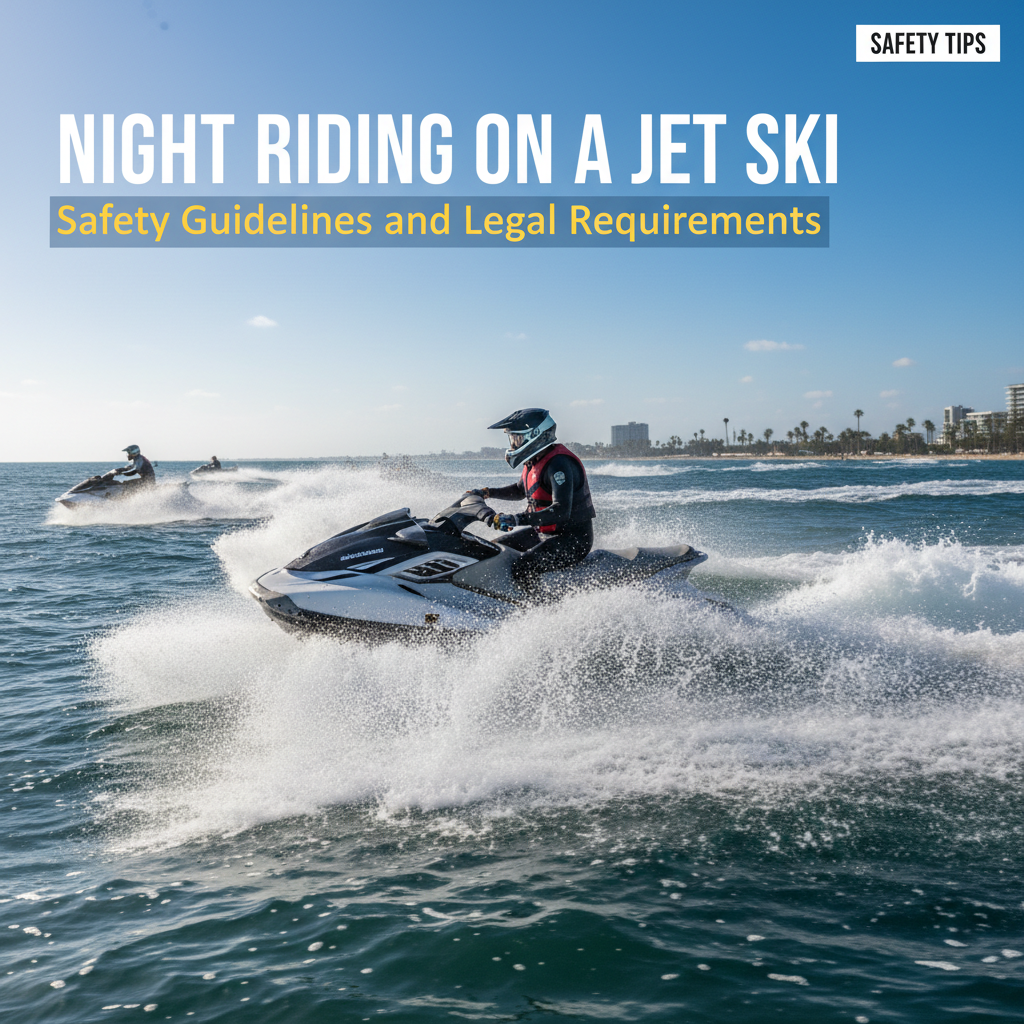
The Ultimate Guide to Night Jet Skiing: Safety and Legal Rules
The sun dips below the horizon, painting the sky in hues of orange and purple. For most boaters, this signals the end of the day, but for a select few, the adventure is just beginning. The allure of gliding across calm, moonlit water is undeniable, offering a completely different sensory experience than daytime riding. However, the thrill of night jet skiing comes with a significant increase in risk and a complex web of legal requirements. Before you even think about launching your personal watercraft (PWC) after dark, it's crucial to understand the rules, regulations, and safety protocols that govern this high-stakes activity.
This comprehensive guide will serve as your go-to resource for safe and legal PWC operation at night. We'll dive deep into the legalities that vary by state, the essential gear you absolutely must have, and the on-water best practices that can mean the difference between an unforgettable ride and a life-threatening emergency. Whether you're a seasoned rider or a newcomer to the sport, this information is critical for your safety and the safety of everyone else on the water.
Is Night Jet Skiing Legal? Understanding Local and Federal Laws
The first and most important question to answer is whether you can even operate your PWC after dark in your area. The short answer is: it depends. There is no single federal law that outright bans nighttime PWC operation, but the U.S. Coast Guard (USCG) has strict requirements for any vessel operating between sunset and sunrise. Furthermore, most states have their own, often more restrictive, laws specifically for personal watercraft.
Generally, states prohibit PWC use from a half-hour after sunset to a half-hour before sunrise. This is the most common regulation you will encounter. The reasoning is based on safety; PWCs are small, highly maneuverable, and can be difficult for larger boats to see, especially in low-light conditions. States like Florida and Texas, two hotspots for PWC activity, have historically enforced these sunset-to-sunrise restrictions. If you're looking for a PWC in these states, it's vital to check the latest rules from the Florida Fish and Wildlife Conservation Commission (FWC) or the Texas Parks and Wildlife Department (TPWD) before you buy. You can browse a huge selection of jet skis for sale in Florida and jet skis for sale in Texas right on our marketplace.
Checking Your State's PWC Regulations for 2026
Laws can and do change, so relying on outdated information is a dangerous gamble. For 2026 and beyond, you must verify the specific regulations for your state and even the specific body of water you plan to ride on. The best source for this information is your state's Department of Natural Resources (DNR), Fish and Wildlife agency, or marine patrol division. A quick search for "[Your State] PWC laws" will usually direct you to the official government website. Pay close attention to the legal definition of "nighttime," as it's almost always tied to official sunset and sunrise times, not just when it feels dark.
For example, states with a strong boating culture like Michigan and Arizona have detailed regulations. Boaters enjoying the Great Lakes or the desert reservoirs need to be equally informed. Before your next trip, ensure you're compliant, whether you're looking for jet skis for sale in Michigan or browsing jet skis for sale in Arizona.
The Consequences of Illegal Operation
Choosing to ignore these laws is a serious mistake. The consequences can range from hefty fines and citations to having your PWC impounded. More importantly, illegal operation puts you and others at extreme risk. In the event of an accident, operating illegally could void your insurance coverage and open you up to significant civil liability. The rules are in place for a reason: to prevent collisions and save lives. The thrill of a short ride isn't worth a lifetime of regret or financial ruin.
Essential Gear for Safe PWC Operation After Dark
If you've confirmed that night jet skiing is legal in your area, the next step is to ensure your PWC and your person are properly equipped. Operating without the correct safety gear is not only illegal but also incredibly reckless. Visibility, both your ability to see and be seen, is the single most important factor for safety at night.
Mandatory Navigation Lighting for Your PWC
This is non-negotiable. The USCG requires any vessel operating at night to display proper navigation lights. For a PWC, this typically means a set of red and green sidelights on the front (red on the port/left, green on the starboard/right) visible from one mile away, and an all-round white light on the stern that is visible from two miles away. This white light must be positioned higher than the sidelights. Most PWCs do not come with this lighting from the factory. You will likely need to install an aftermarket kit. There are many high-quality, waterproof, USCG-approved LED light kits available, including both permanent installations and reliable temporary mounts that use suction cups or clamps.
Do not cheap out on lighting. Your life depends on other boaters seeing you. Ensure any system you install is robust, waterproof, and has a reliable power source. Many of the newly listed jet skis may have enhanced electrical systems better suited for these additions.
Personal Safety and Communication Equipment
Beyond your PWC's lights, your personal gear is your last line of defense. A standard daytime setup is not sufficient for the increased risks of riding at night. Your nighttime safety kit should include:
- USCG-Approved Life Jacket: It should fit snugly and be equipped with reflective tape and a waterproof safety light or strobe.
- Distress Signals: At a minimum, carry a waterproof flashlight or headlamp (with extra batteries) and a whistle or air horn. For offshore or remote riding, a full set of SOLAS-grade flares and a Personal Locator Beacon (PLB) are highly recommended.
- Communication Device: Your cell phone in a waterproof pouch is a start, but it's not reliable offshore. A waterproof, floating handheld VHF radio is a far superior tool for communicating with the Coast Guard or other vessels.
- Kill Switch Lanyard: This is always a must, but at night, it's even more critical. If you fall off, your PWC will stop, preventing it from becoming a runaway hazard in the dark.
- GPS/Chartplotter: A marine GPS unit with a backlit screen or night mode is essential for navigation. Don't rely on your memory of the waterway; landmarks disappear in the dark.
Pre-Ride Checklist and On-Water Best Practices
Proper preparation and disciplined riding habits are paramount for a successful night excursion. The margin for error is razor-thin after the sun goes down, so a methodical approach is required every single time you go out.
Before you leave the dock, run through a thorough pre-ride checklist. Inspect your fuel levels, plan to use more than you think you need. Check your battery and ensure it's fully charged to power your lights and electronics. Most importantly, test all of your navigation lights to confirm they are working correctly. You should also check the latest marine weather forecast; a calm evening can quickly turn into a dangerous situation if a storm rolls in. Finally, always file a float plan. Tell a reliable person on shore where you are going, who is with you, and when you expect to return.
Once on the water, your riding style must adapt to the conditions. The number one rule of night jet skiing is to reduce your speed dramatically. You need to be able to stop within the distance illuminated by your own vessel. Overdriving your visibility is a recipe for disaster. Stick to familiar waterways that you know well in the daytime. Nighttime is not the time to explore new channels or coves. Be constantly scanning the water ahead for unlit buoys, floating debris like logs, and other vessels. Learn to identify the navigation lights of other boats so you can understand their size, direction, and status.
Enhancing Visibility and Avoiding Common Nighttime Hazards
Even with the best lights, a PWC is a small target on the water. You need to do everything possible to enhance your visibility to other boaters. Adding strips of high-quality, marine-grade reflective tape to the sides and stern of your watercraft can make it pop when another boat's lights hit it. The same goes for your apparel; wear bright or reflective clothing over your life jacket. Some riders even add reflective tape to their helmets.
The water is full of hazards that are easy to spot during the day but become nearly invisible at night. Partially submerged logs, crab pots, unlit channel markers, and shallow sandbars pose a huge threat. This is another reason why reducing speed and staying in a known, deep channel is so important. Be especially cautious around inlets and areas with heavy boat traffic. Even some modern, high-end models like top-tier Kawasaki jet skis with advanced digital displays can't see a dark object floating just below the surface. Your eyes and your caution are your best tools.
Frequently Asked Questions About Night Jet Skiing
Can any jet ski be used for night riding?
No. A stock jet ski is almost never equipped for legal or safe night riding. To be operated at night (where legal), a PWC must be retrofitted with USCG-approved navigation lights: red/green sidelights and an all-round white masthead light. Without these specific lights, it is illegal and extremely dangerous to operate after sunset.
What are the most common mistakes people make when jet skiing at night?
The most frequent and dangerous mistakes are excessive speed, riding without proper navigation lights, venturing into unfamiliar waters, riding alone, and consuming alcohol. Alcohol impairs judgment, coordination, and night vision, and its effects are magnified on the water. It should be avoided entirely when operating any vessel, especially at night.
Is it legal to ride a jet ski at night in Florida or Texas?
This is a very common question, and generally, the answer is no. In both Florida and Texas, PWC operation is typically restricted to the hours between 30 minutes before sunrise and 30 minutes after sunset. Even if your PWC has lights, these state-level restrictions usually override the ability to ride. Laws can be updated, so always check the latest regulations from the FWC and TPWD before planning any trip. If you're in the market, explore our listings for jet skis for sale to find a model that fits your needs.
Your Next Adventure Awaits, Safely
Riding a PWC under a starry sky can be a truly magical experience, but it's one that demands respect, preparation, and a commitment to safety. By understanding and adhering to the law, properly equipping your watercraft, and adopting a cautious mindset, you can mitigate the risks associated with night jet skiing. Always prioritize safety over thrills. Check your local laws, install the right gear, and ride smart.
Ready to find the perfect PWC for all your adventures, day or night? Browse thousands of listings on JetSportsTrader.com or find trusted dealers near you to get started on your journey today!
Ready to buy or sell? Explore the jet ski marketplace, browse jet skis for sale, jet ski valuation calculator, or sell your jet ski at Jet Sports Trader.
Related Articles
How to Trailer a Jet Ski Across State Lines Without Problems
Planning on trailering a jet ski interstate? This guide covers the essential legal requirements, safety checks, and driving tips to ensure your PWC arrives safely.

Jet Ski Laws by State: Age Limits, Licenses, and No-Wake Rules
Don't get fined on the water! Our 2026 guide to jet ski laws breaks down age limits, boater education, and no-wake rules by state so you can ride safely and legally.
Cold Water Jet Skiing: Wetsuits, Risks, and Shoulder-Season Riding
Don't let cooler temperatures end your PWC season. Our guide to cold water jet skiing covers the essential gear, safety protocols, and risks to extend your riding adventures.
Ready to Find Your Perfect Jet Ski?
Browse thousands of listings from trusted dealers nationwide