
Supercharged vs Naturally Aspirated Jet Skis: Performance Deep Dive
Is a supercharged jet ski right for you? This deep dive compares supercharged vs naturally aspirated PWC performance, cost, and maintenance to help you choose the perfect ride.
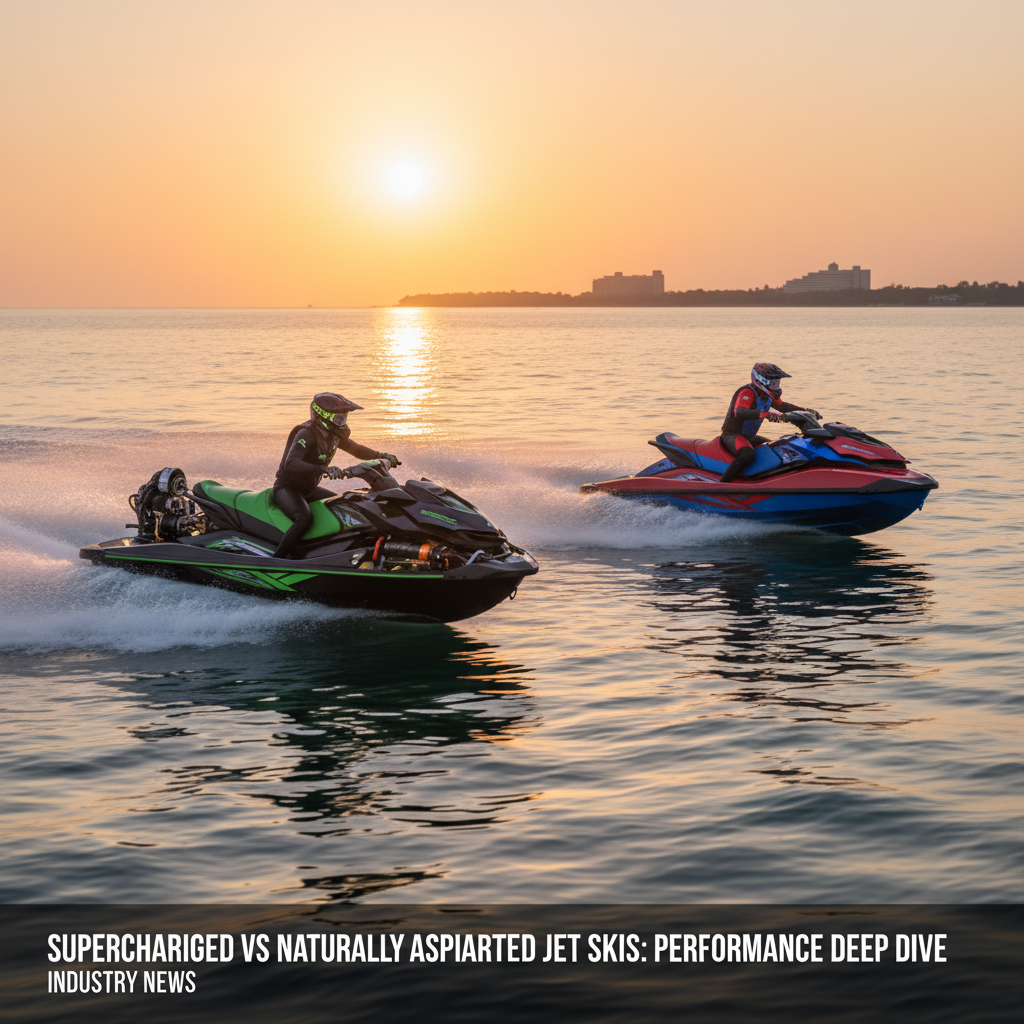
Supercharged vs Naturally Aspirated Jet Skis: A 2026 Performance Deep Dive
The roar of an engine, the spray of water, and the thrill of speed, this is the heart of the personal watercraft (PWC) experience. But when you’re deciding on your next ride, a critical question emerges: do you go for the raw, unadulterated power of a supercharged jet ski or the reliable, efficient performance of a naturally aspirated model? This decision significantly impacts everything from your initial cost to your on-water experience and long-term maintenance. This guide will provide a comprehensive deep dive into both engine types, helping you understand the mechanics, compare performance metrics, and ultimately choose the perfect PWC for your needs.
What is a Supercharged Jet Ski Engine?
At its core, a supercharged jet ski engine is all about forced induction. Unlike a naturally aspirated (NA) engine that relies on atmospheric pressure to draw air into its cylinders, a supercharged engine uses a belt-driven compressor, the supercharger, to force-feed a much denser air-fuel mixture into the combustion chamber. Think of it like using a powerful fan to stoke a fire; more air equals a bigger, more powerful explosion. This process dramatically increases the engine's horsepower and torque without significantly increasing its physical size or displacement.
This technology is what allows modern PWCs like the Sea-Doo RXP-X 325 and the Kawasaki Ultra 310LX-S to produce over 300 horsepower from relatively compact three or four-cylinder engines. The result is blistering acceleration, often called the “hole shot,” and a higher top speed. A supercharged jet ski delivers a visceral, adrenaline-pumping experience that is simply unmatched by its NA counterparts. The instant throttle response provides a connected feel that performance riders crave, making these machines the kings of the water when it comes to pure, straight-line speed and thrilling power.
How Superchargers Boost PWC Performance
The magic of the supercharger lies in its ability to overcome the limitations of atmospheric pressure. By compressing incoming air, it packs more oxygen molecules into each cylinder for every combustion cycle. This super-dense charge, when mixed with an appropriate amount of fuel (usually premium octane), creates a much more potent explosion, pushing the pistons down with greater force. This translates directly to more power at the crankshaft and, ultimately, more thrust from the jet pump.
Many high-performance models also incorporate an intercooler. As air is compressed, it heats up and becomes less dense, partially negating the supercharger's effect. An intercooler is a heat exchanger that cools the compressed air before it enters the engine, making it even denser and allowing for a more powerful and efficient combustion. This combination of a supercharger and intercooler is the key to the massive power outputs seen in today's top-tier performance watercraft.
The Case for Naturally Aspirated Engines: Reliability and Efficiency
While the allure of a supercharged engine is undeniable, naturally aspirated (NA) models command a huge portion of the market for very good reasons: reliability, simplicity, and cost-effectiveness. An NA engine operates on a simpler principle, using the vacuum created by the piston's downward stroke to pull the air-fuel mixture into the cylinder. With fewer moving parts and less stress on internal components, these engines have a well-deserved reputation for being workhorses.
Models like the popular Yamaha WaveRunners VX series or Sea-Doo's GTI lineup are beloved for their dependability and lower maintenance demands. They are generally more fuel-efficient and run on regular 87-octane gasoline, whereas most supercharged models require premium 91+ octane fuel. This adds up to significant savings over a season of riding. For riders who prioritize trouble-free operation, longer days on the water without refueling, and lower overall ownership costs, the naturally aspirated PWC is an outstanding choice. They provide more than enough power for tubing, cruising with family, and spirited riding, making them the most versatile option for the majority of users.
Lower Maintenance and Ownership Costs
The simplicity of an NA engine translates directly to your wallet. There is no supercharger clutch to wear out or bearings to fail. Most notably, there is no need for periodic supercharger rebuilds, a maintenance task required on many supercharged models every 100-200 hours, which can cost upwards of $500 to $1,500. This is a significant long-term expense that NA owners completely avoid.
Furthermore, the initial purchase price for an NA watercraft is substantially lower than a comparable supercharged jet ski. This lower entry barrier makes the sport more accessible. When it comes time to upgrade, this cost difference can also affect resale value. You can get a quick estimate of your current PWC's worth using a jet ski valuation calculator to see how these factors play out in the used market. For many, the fun-per-dollar ratio is simply higher with a naturally aspirated machine.
Head-to-Head Performance Comparison: Speed, Acceleration, and Handling
When you line them up, the performance differences are stark. A high-performance supercharged PWC can go from 0 to 60 mph in under 4 seconds, while a peppy NA model might take 6-8 seconds. While both will eventually reach top speeds governed by a gentleman's agreement at around 67 mph (for US models), the supercharged unit gets there with breathtaking urgency. This explosive acceleration is the primary performance benefit and what defines the supercharged experience.
However, performance isn't just about speed. Here's a breakdown of key areas:
- Acceleration (Hole Shot): Clear winner - Supercharged. The instant torque provides a G-force-inducing launch that NA models cannot replicate.
- Top Speed: Tie (mostly). While some race-tuned supercharged models can be modified to exceed 70 mph, stock units are typically limited to around 67 mph, a speed that high-output NA models can also approach. The difference is how quickly they get there.
- Throttle Response: Winner - Supercharged. The power is always on tap, providing an immediate response to any input from the rider's thumb.
- Fuel Economy: Clear winner - Naturally Aspirated. On average, an NA engine can be 25-40% more fuel-efficient, allowing for significantly more range on a tank of fuel.
- Handling: It depends. Supercharged models are often built on larger, heavier hulls designed for stability at high speeds and in offshore chop. Lighter NA models can feel more nimble and playful, especially for less experienced riders.
Choosing the Right PWC for You: Key Considerations
The choice between a supercharged and a naturally aspirated jet ski ultimately comes down to your personal priorities, budget, and how you plan to use the watercraft. There is no single “best” answer, only what is best for you. Whether you're searching for jet skis for sale in Florida for ocean riding or jet skis for sale in Michigan for lake cruising, the right engine choice is paramount.
Consider where you ride. If you frequent the vast waters off the coast of Georgia, the extra power of a supercharged model can be thrilling. You can find many options among the jet skis for sale in Georgia. However, for smaller lakes or more casual family outings, an NA model often makes more sense. Ultimately, the decision rests on a balance of adrenaline versus practicality.
Rider Experience Level and Intended Use
For new riders, a naturally aspirated PWC is almost always the recommended choice. Their power delivery is more predictable and forgiving, making it easier to learn basic handling and build confidence. The raw power of a supercharged jet ski can be intimidating and even dangerous for a novice. Experienced riders or those with a serious need for speed who want to race or perform high-intensity maneuvers will naturally gravitate towards the supercharged models.
Think about your primary activities. Are you planning on pulling wakeboarders and tubers? A high-torque NA model is perfectly capable. Are you planning on long-distance touring? The fuel efficiency of an NA engine will be a massive advantage. If your goal is to have the fastest ski at the sandbar and experience the ultimate thrill ride, then the supercharged option is your answer. If you're considering an upgrade, it might be the right time to sell your jet ski and step into the category that best fits your evolving style.
Fuel Economy and Long-Term Costs
Do not underestimate the long-term cost of ownership. A 2026 supercharged model might cost $5,000-$8,000 more than its NA sibling upfront. Add to that the cost of premium fuel, which can be an extra $10-$15 per fill-up, and the eventual supercharger service. Over five years of ownership, a supercharged model could easily cost an additional $4,000-$6,000 in fuel and maintenance alone compared to an NA model. This is a crucial factor for budget-conscious buyers to consider.
Frequently Asked Questions
Is a supercharged jet ski worth the extra cost?
This depends entirely on the rider. If you are a performance enthusiast who craves maximum acceleration and the thrill of top-tier power, then yes, the extra cost is often worth the unmatched experience. For casual family riders, cruisers, or budget-conscious individuals, a naturally aspirated model offers a better overall value with lower running costs and sufficient performance for most activities.
How much faster is a supercharged PWC?
In terms of top speed, stock models are often electronically limited to similar speeds around 65-67 mph. The real difference is in acceleration. A supercharged jet ski can reach its top speed significantly quicker, often hitting 60 mph in under 4 seconds, whereas a naturally aspirated ski might take twice as long. This 'time to speed' is the key performance differentiator.
What maintenance does a supercharger require?
Supercharger maintenance is a critical aspect of ownership. Most manufacturers, like Sea-Doo, recommend a rebuild of the supercharger clutch washers and bearings at specific service intervals, typically every 100 to 200 operating hours. Neglecting this service can lead to catastrophic failure, which can destroy the entire engine. This service should be performed by a qualified technician and is a significant long-term cost to factor into your budget.
Find Your Perfect Ride on JetSportsTrader.com
Whether you've decided the blistering power of a supercharged beast is for you, or the reliable efficiency of a naturally aspirated workhorse better suits your style, your next adventure starts here. The debate between a supercharged vs. naturally aspirated PWC is all about matching the machine to your mission on the water. Each has its merits, and the 2026 model lineups from all major manufacturers offer incredible options in both categories.
We encourage you to explore the vast selection of new and used personal watercraft for sale on JetSportsTrader.com. Browse our featured jet ski listings to see the best of what's available, from high-horsepower muscle craft to versatile and efficient cruisers. The perfect ride is waiting for you. Start your search today and get ready to make some waves!
Ready to buy or sell? Explore the jet ski marketplace, or browse jet skis for sale at Jet Sports Trader.
Related Articles

Jet Ski Navigation and Safety Apps Every Rider Should Install
Unlock a safer, more exciting ride with the top jet ski apps for 2026. This guide covers the essential navigation, weather, and safety tools every PWC rider needs on their phone.

How GPS and Fish Finders Are Revolutionizing Jet Ski Adventures
Discover how a jet ski GPS and fish finder can revolutionize your PWC adventures. This 2026 guide covers everything from choosing a unit to advanced navigation techniques.
Environmental Impact of Personal Watercraft: Separating Myths from Facts
Curious about the jet ski environmental impact? We separate myth from fact, exploring how modern 4-stroke engines have made PWC riding far more sustainable than you might think.
Ready to Find Your Perfect Jet Ski?
Browse thousands of listings from trusted dealers nationwide