
Sea-Doo vs Yamaha vs Kawasaki: Which Brand Is Right for You?
Struggling with a Sea-Doo vs. Yamaha vs. Kawasaki decision? Our in-depth jet ski brands comparison breaks down the pros and cons of each to help you choose the best PWC.
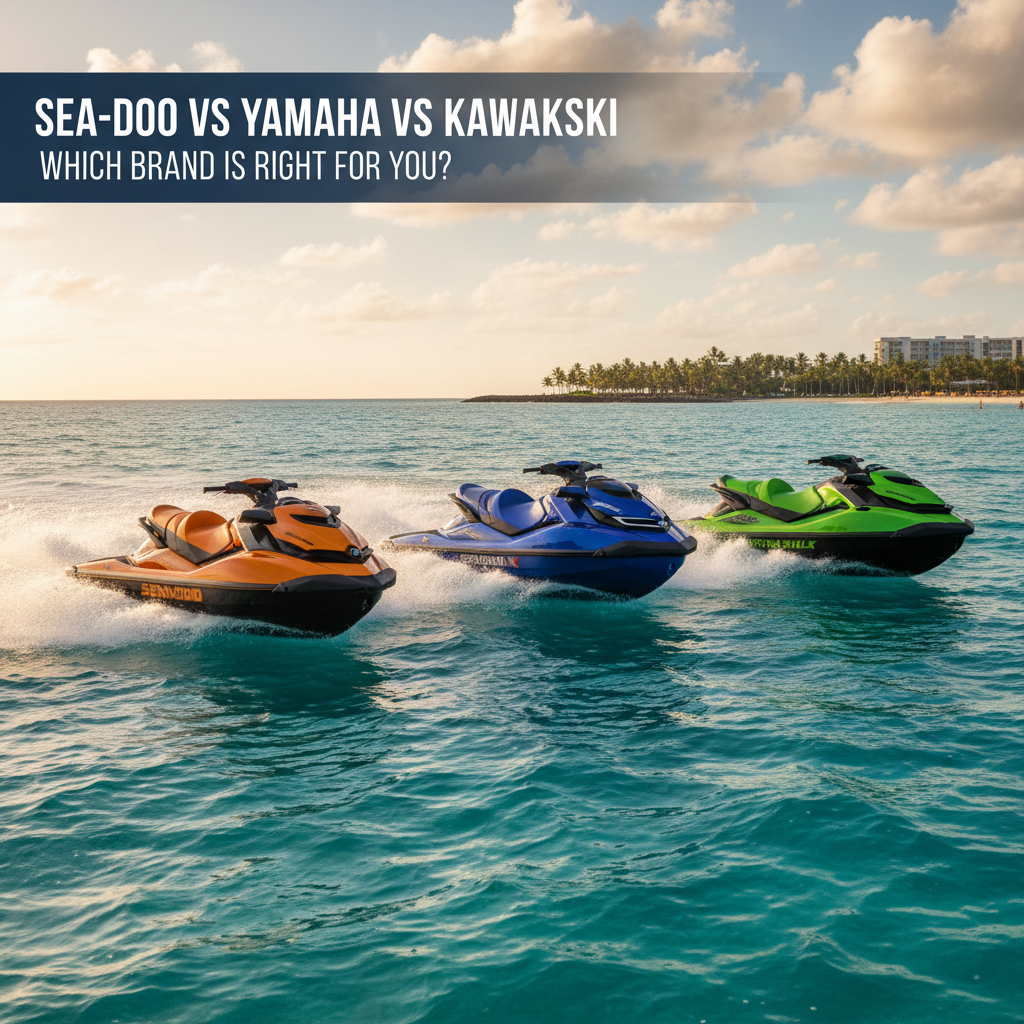
The Ultimate 2026 Jet Ski Brands Comparison: Sea-Doo vs. Yamaha vs. Kawasaki
Choosing your next personal watercraft (PWC) is an exhilarating process, but with three dominant manufacturers in the market, it can also be a tough decision. Sea-Doo, Yamaha, and Kawasaki each bring a unique philosophy to the water, excelling in different areas. This in-depth jet ski brands comparison for 2026 will dissect the strengths, weaknesses, and target audience for each brand, empowering you to make an informed choice. Whether you're a first-time buyer or a seasoned enthusiast, this guide will help you navigate the nuances of the industry's titans.
From Sea-Doo's relentless innovation and feature-packed models to Yamaha's legendary reliability and Kawasaki's raw, unadulterated power, there's a perfect machine out there for every rider. We'll explore their model lineups, signature technologies, and what truly sets them apart. By the end, you'll have a clear understanding of which brand's DNA aligns best with your personal style of riding and budget.
Sea-Doo: The King of Innovation and Features
When you think of cutting-edge technology and accessible fun in the PWC world, you think of Sea-Doo. A brand under the Bombardier Recreational Products (BRP) umbrella, Sea-Doo has built its reputation on pushing boundaries and offering a diverse lineup that caters to nearly every rider. They are often credited with making the sport more approachable, largely thanks to their revolutionary Spark series, which offers an affordable and lightweight entry point.
Beyond the entry-level, Sea-Doo personal watercraft are famous for their industry-leading features. Their proprietary iBR (Intelligent Brake and Reverse) system was a game-changer for low-speed maneuverability and docking. Furthermore, the versatile LinQ accessory system allows riders to quickly attach coolers, fuel caddies, and storage bags, making their watercraft incredibly modular. Add in premium BRP Bluetooth audio systems and vibrant full-color displays, and you have a PWC built for the modern, tech-savvy rider.
Who is a Sea-Doo For?
Sea-Doo excels at appealing to a broad audience. Their watercraft are an ideal choice for budget-conscious beginners who want to get on the water without a massive investment, thanks to the playful and affordable Spark models. They are also perfect for families seeking versatility, with models like the GTX and Wake Pro offering three-person capacity, stability, and features for tow sports. Tech enthusiasts who crave the latest gadgets will feel right at home with Sea-Doo's advanced electronics and accessory options. However, some purists argue that their Polytec hulls, while durable and lightweight, may not feel as rigid as traditional fiberglass in heavy chop.
Yamaha WaveRunner: The Benchmark for Reliability and Performance
Yamaha's marine division has forged an unparalleled reputation for one thing above all else: bulletproof reliability. For decades, Yamaha WaveRunners have been the go-to choice for riders who prioritize longevity, low maintenance, and peace of mind. Their engines, particularly the naturally aspirated 1.8L High Output and the supercharged SVHO, are legendary for their robust construction and ability to run for hundreds of hours with routine care.
Yamaha isn't just about reliability; they deliver exceptional performance and thoughtful engineering. Their RiDE (Reverse with Intuitive Deceleration Electronics) system provides dual-throttle controls for effortless forward, neutral, and reverse maneuvering. The brand's proprietary NanoXcel2 hull and deck material creates a product that is both incredibly light and remarkably strong, enhancing acceleration, fuel efficiency, and handling. The 2026 lineup spans from the nimble EX series to the race-ready GP models and the feature-rich, comfortable FX series, ensuring a WaveRunner for every application.
Who is a Yamaha WaveRunner For?
A Yamaha WaveRunner is the perfect match for the pragmatic rider who values long-term ownership and minimal downtime. If your top priority is a machine that starts every time and costs less in maintenance over its lifespan, Yamaha should be at the top of your list. They are a favorite among touring enthusiasts and anglers who rely on their craft for long-distance journeys, often far from shore. Performance junkies also flock to the GP series, which offers a potent combination of speed and agility backed by that famous Yamaha dependability. This focus on core engineering makes them a top consideration in any serious jet ski brands comparison.
Kawasaki Jet Ski: The Original Powerhouse
Kawasaki holds a special place in PWC history, they invented the category and the brand name "Jet Ski" has become the generic term for all personal watercraft. This legacy is built on a foundation of raw power, aggressive performance, and a racing pedigree. While other brands have diversified, Kawasaki has largely remained true to its roots, focusing on building some of the most powerful and capable machines on the water.
The heart of a modern Kawasaki Jet Ski is often its supercharged 1,498cc inline four-cylinder engine, a beast that delivers breathtaking acceleration and top speeds. This potent powerplant is typically paired with a deep-V hull designed to slice through rough water with unmatched stability, making Kawasakis a top choice for open-ocean and choppy lake riding. Their flagship Ultra 310 series is the epitome of this philosophy, blending immense power with luxury features for the ultimate performance-touring experience. They also cater to the purist with the stand-up SX-R 160, a true athlete's machine.
Who is a Kawasaki Jet Ski For?
Kawasaki Jet Skis are built for the adrenaline junkie. If you are an experienced rider with a need for speed and a desire for a machine that commands respect, Kawasaki is your brand. Their models are particularly well-suited for riders who frequently venture into large, unpredictable bodies of water where the stable deep-V hull can truly shine. While they offer fewer entry-level options, those who can handle and afford their high-performance models are rewarded with an exhilarating and dominant riding experience. They are, in essence, the muscle cars of the PWC world.
Head-to-Head: Key Differentiators at a Glance
To simplify this jet ski brands comparison, let's break down the core differences in a few key areas:
- Reliability & Maintenance: Yamaha is the undisputed champion here, known for engines that can last thousands of hours. Kawasaki is a very close second, with robust engineering. Sea-Doo's modern Rotax engines are highly reliable, but their advanced electronics and systems can introduce more potential maintenance points over a long lifespan.
- Performance & Speed: This is a tight race at the top end. Kawasaki's Ultra 310 models are legendary for their raw horsepower and rough-water dominance. Sea-Doo's RXP-X 325 is incredibly quick and agile, often winning in closed-course racing. Yamaha's GP1800R SVHO is a formidable competitor, offering a superb balance of power and handling.
- Features & Technology: Sea-Doo is the clear winner in this category. Their iBR, LinQ accessory ecosystem, BRP audio, and advanced digital displays are second to none. Yamaha offers excellent, user-friendly tech like the RiDE system and Connext touchscreen, but Sea-Doo provides more innovative "gadgets." Kawasaki focuses more on performance-enhancing features than creature comforts.
- Price & Value: Sea-Doo offers the lowest cost of entry with the Spark series, making the sport accessible to more people. Yamaha often represents the best long-term value due to its incredible reliability and strong resale value. Kawasaki commands a premium price for its premium power, positioning itself at the higher end of the market.
- Model Variety: Sea-Doo and Yamaha offer the most extensive lineups, with models in every category from Rec-Lite and Recreation to Tow Sports, Performance, and Luxury. Kawasaki has a more focused range, concentrating primarily on high-performance and luxury-performance segments.
Making Your Final Decision & Finding Your PWC
Ultimately, this jet ski brands comparison shows there is no single "best" brand, only the best brand for your specific needs. To make your choice, start by honestly assessing your priorities. Are you on a tight budget and love tech? Look at Sea-Doo personal watercraft. Is unwavering reliability and long-term value your main concern? A Yamaha WaveRunner is likely your best bet. Do you crave maximum power and ride in challenging water? A Kawasaki Jet Ski is calling your name. For more detailed guidance, be sure to check out our complete jet ski buying guide.
Once you've narrowed down your choice, consider your finances. You can use our handy jet ski financing calculator to estimate your monthly payments. Then, the fun begins. Start browsing the huge selection of new and used jet skis for sale on JetSportsTrader.com. Whether you're looking for a great deal on a pre-owned model or one of the latest 2026 flagships, you'll find it in our marketplace. From the sunny coasts of the Southeast with thousands of jet skis for sale in Florida to the lakes of the Midwest, your perfect ride is waiting. Now, get out there and hit the water!
Frequently Asked Questions
Which jet ski brand is the most reliable?
While all three major brands produce reliable watercraft, Yamaha consistently earns the top reputation for long-term reliability and durability. Their engines are renowned for their robust design and ability to withstand extensive use with regular maintenance, making them a favorite for rental fleets and high-hour riders.
What is the best jet ski brand for a beginner?
Both Sea-Doo and Yamaha offer excellent options for beginners. The Sea-Doo Spark is arguably the best entry-level PWC due to its low price, light weight, and non-intimidating power. Yamaha's EX series is another fantastic choice, offering that legendary reliability in an easy-to-handle and affordable package.
Which brand holds its value best?
Yamaha WaveRunners are widely known for having the strongest resale value in the industry. Their reputation for longevity and reliability means that buyers in the used market are often willing to pay a premium for them. Kawasaki's high-performance models also hold their value very well among enthusiasts.
Ready to buy or sell? Explore the jet ski marketplace, browse jet skis for sale, jet ski valuation calculator, or sell your jet ski at Jet Sports Trader.
Related Articles
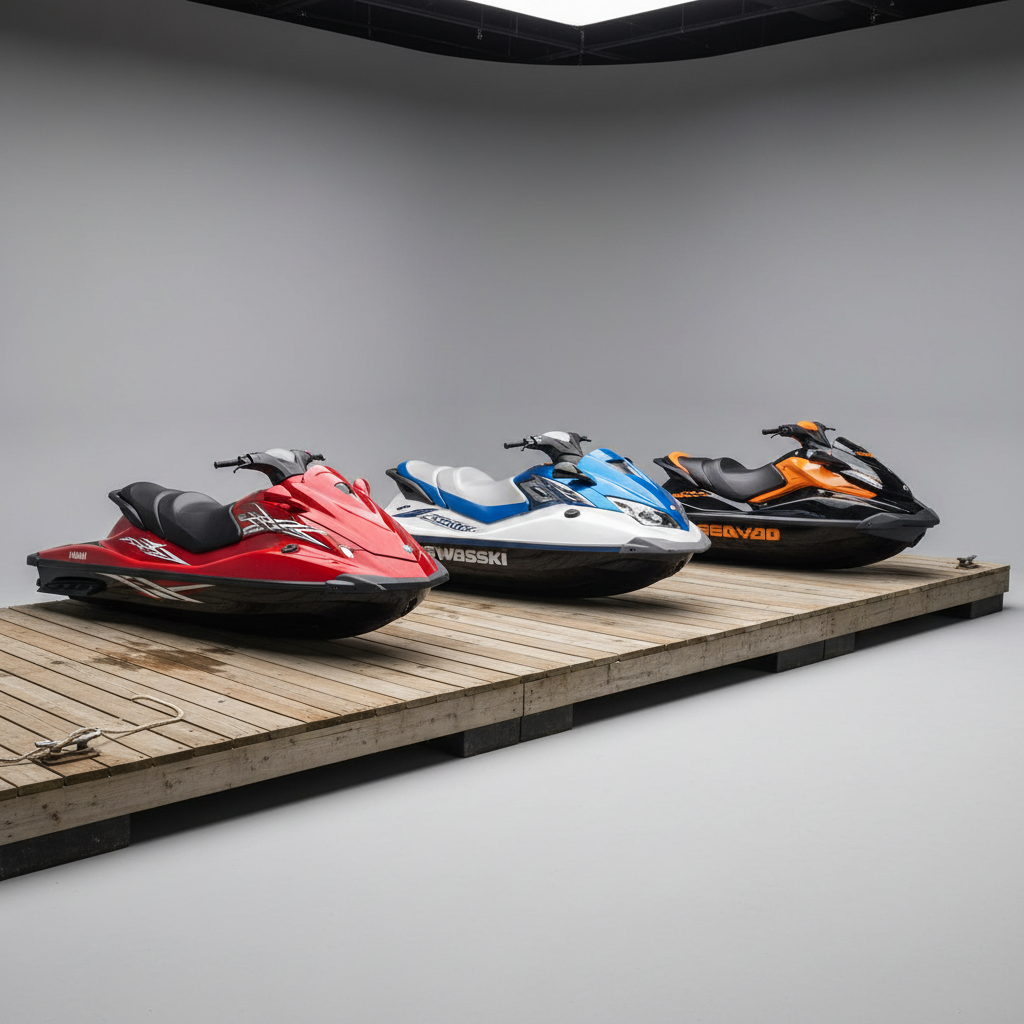
Best Jet Skis Under $10,000: Smart Buys on the Used Market
Looking for a jet ski under $10,000? Discover the best used models from Sea-Doo, Yamaha, and Kawasaki that offer incredible value and performance without breaking the bank.
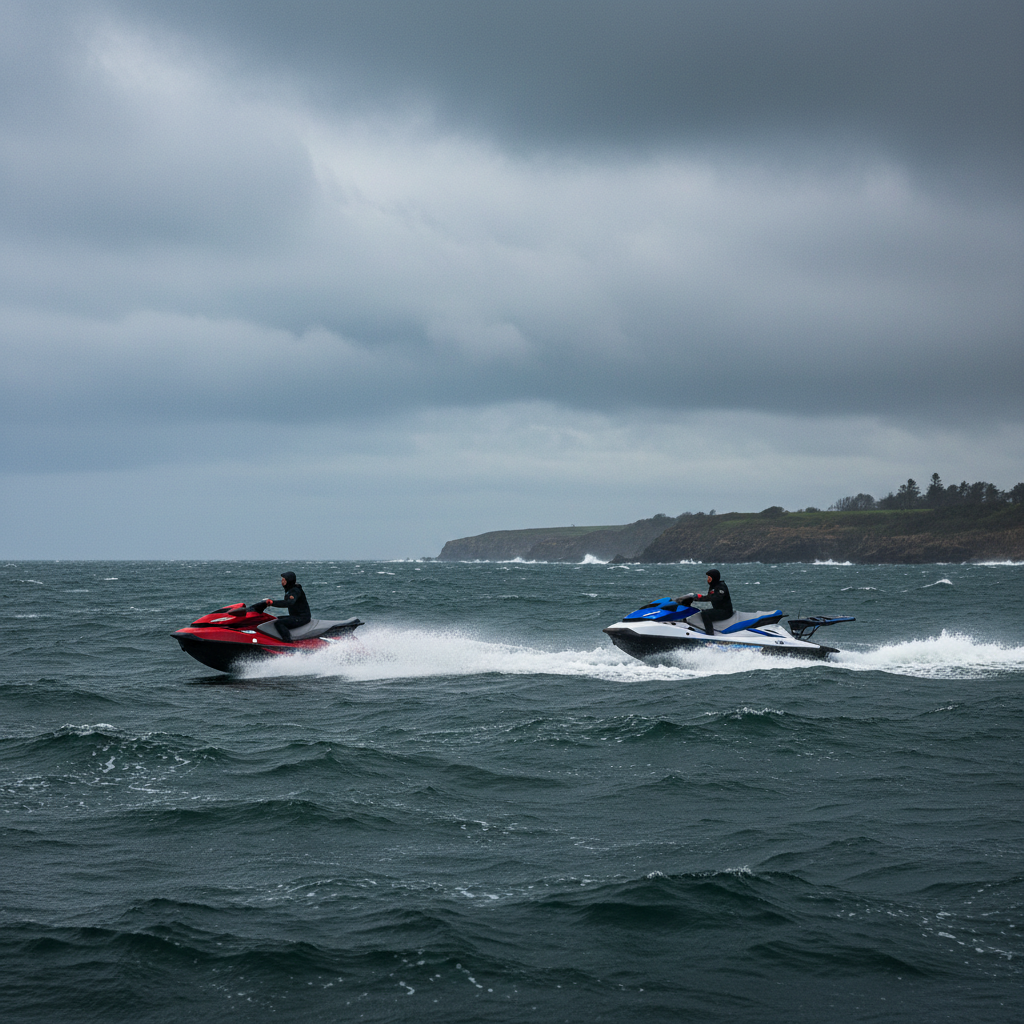
Two-Seater vs Three-Seater Jet Skis: Choosing the Right Size
Is a 3 seater jet ski right for you? This guide breaks down the key differences in performance, stability, storage, and cost between two and three-seater models.

Jet Ski Warranties and Extended Coverage: Are They Worth It?
Is an extended jet ski warranty worth the cost? This guide covers the pros, cons, and what's included to help you decide if PWC extended coverage is a smart investment for you.
Ready to Find Your Perfect Jet Ski?
Browse thousands of listings from trusted dealers nationwide