
Jet Ski Weight and Capacity Limits: Critical Specs Before You Buy
Ignoring the jet ski weight limit is a major safety risk. Learn how to find your PWC's capacity and what happens when you exceed it in our comprehensive buyer's guide.
Jet Ski Weight and Capacity Limits: Critical Specs Before You Buy
You’re picturing the perfect day on the water: sun shining, a cool breeze, and the thrill of skimming across the waves on your personal watercraft (PWC). Whether you're planning solo adventures, rides with family, or towing a tube, one of the most critical factors you must consider is the jet ski weight limit. Ignoring this crucial specification doesn't just affect performance; it's a major safety concern that can turn a dream day into a dangerous situation. This guide will walk you through everything you need to know about PWC weight and capacity, ensuring you make an informed decision when browsing our extensive selection of personal watercraft for sale. We'll cover how to find capacity ratings, what they include, and the real-world consequences of overloading your craft.
Why PWC Weight Capacity is More Than Just a Number
It's easy to glance at a spec sheet and dismiss the weight capacity as a minor detail, but it's arguably one of the most important figures for both safety and enjoyment. The manufacturer sets this limit after extensive testing to guarantee the PWC remains stable, buoyant, and controllable under specific load conditions. Exceeding this number compromises the fundamental design of the watercraft. Think of it as the very foundation of your safety on the water. An overloaded PWC becomes unpredictable, difficult to handle, and significantly more prone to capsizing, especially when stationary or moving at low speeds. This is particularly true in choppy conditions, where stability is paramount. Furthermore, your insurance policy may be voided if an accident occurs while the craft is overloaded, leaving you with massive liability. It’s a non-negotiable rule for safe and responsible PWC operation.
Beyond the critical safety aspects, adhering to the jet ski weight limit directly impacts your watercraft's performance and longevity. A PWC is engineered to perform optimally within its specified load range. When you overload it, you'll notice a significant drop in acceleration and top speed. The hull sits lower in the water, creating more drag, which forces the engine to work much harder. This increased strain leads to higher fuel consumption and can cause premature wear and tear on the engine, driveline, and other components. Essentially, by overloading your ski, you're paying more for fuel, getting a less thrilling ride, and shortening the lifespan of your investment. Respecting the weight capacity ensures you get the exhilarating performance you paid for and helps maintain your PWC's value over time, which is important whether you buy new or from our listings of used jet skis for sale.
Understanding the Different Types of Jet Ski Weight
When you start researching different models, you'll encounter several weight-related terms. Understanding the distinction between them is key to accurately determining how much capacity you have for people and gear. Manufacturers like Sea-Doo, Yamaha, and the makers of Kawasaki jet skis use standardized terms, but it's crucial to know what each one means.
Dry Weight: The Baseline Spec
Dry weight is the absolute lightest your PWC will ever be. It represents the weight of the watercraft straight from the factory, with no fluids whatsoever. This means no engine oil, no coolant, and, most significantly, no fuel. While it's a standard metric used for shipping and comparisons, it's not a practical number for real-world calculations. Think of it as the starting point from which all other weight calculations are built. It's a useful spec for understanding the base heft of a machine, especially if you plan on trailering it with a smaller vehicle, but it's not the number you'll use to figure out your on-the-water load.
Curb Weight: The Real-World Starting Point
Curb weight is a much more useful and realistic figure. It represents the weight of the PWC with all necessary fluids, like a full tank of fuel, engine oil, and coolant, and standard equipment like the battery. This is essentially the weight of your jet ski as it sits on the trailer, ready to be launched. When you're calculating your total load, you need to consider the curb weight as your baseline, not the dry weight. The difference can be substantial; a 20-gallon fuel tank alone adds about 120 pounds. Knowing the curb weight is essential for ensuring your trailer and tow vehicle are properly rated for the job.
Rider & Gear Capacity: The Number That Matters Most
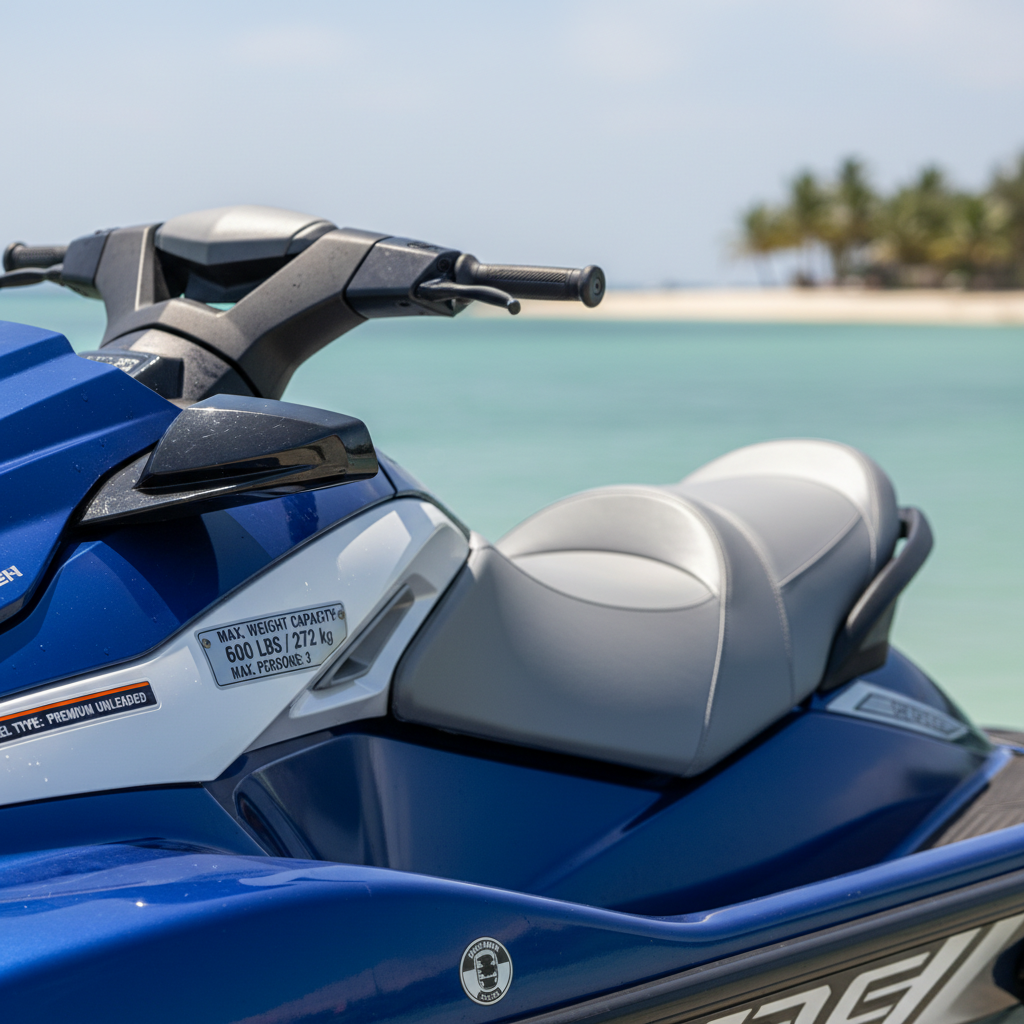
This is the most important number for your day-to-day operation. The rider and gear capacity, often simply called "maximum load capacity," is the total weight of people, gear, and any accessories you can safely add to the PWC. This figure is typically displayed on a sticker or plate located on the craft itself, often near the stern or in a storage compartment. It’s the number that dictates how many passengers you can carry and how much equipment you can bring along. When calculating if you're within the jet ski weight limit, you must add up the weight of every single thing you're putting on the ski that isn't part of its curb weight.
How to Find and Calculate Your Total Load
Calculating your total load before each ride is a simple but vital habit. The first step is to locate the manufacturer's capacity label on your PWC. For 2026 models and recent years, this is a legal requirement and is usually very easy to find. If you can't find the label or are shopping for a used model, a quick search in our complete jet ski model directory can provide the specs for almost any PWC ever made. Once you have the maximum load capacity number, it's time to do some simple addition. Be honest and thorough in your calculations; underestimating can lead to trouble.
To ensure you stay safely under the maximum capacity, add up the weight of everything you plan to bring aboard. A common mistake is only counting the passengers. You must account for all items. Here is a checklist to help you calculate your total load:
- Riders: The combined weight of yourself and all passengers. Don't guess; it’s better to be conservative.
- Safety Gear: Life vests (PFDs), fire extinguisher, first-aid kit, and signaling devices. While not heavy, they add up.
- Coolers: A cooler itself is heavy, and once you add ice, drinks, and food, it can easily add 30-50 pounds.
- Watersports Equipment: Tow ropes, tubes, wakeboards, and skis. Remember that a waterlogged tube is much heavier than a dry one.
- Personal Items: Towels, dry bags, sunscreen, waterproof speakers, and anchors.
- Accessories: Any aftermarket additions like fishing rod holders, GPS units, or extra storage bins.
Consequences of Exceeding the Jet Ski Weight Limit
The warnings on the capacity label aren't just suggestions; they are based on physics and engineering. Overloading a PWC creates a low-riding, unstable platform that is difficult to control and prone to taking on water. The stern will sit dangerously low, making it incredibly easy for the ski to become swamped by its own wake or a passing boat's wave, especially at idle speeds. This is a fast track to a submerged engine and a very expensive repair bill. Handling also suffers dramatically. An overloaded ski won't turn, accelerate, or stop as designed. In an emergency maneuver, this sluggish response could be the difference between a close call and a collision. It's a risk not worth taking, especially in busy waterways like those found near our popular listings for jet skis for sale in Georgia. Before you buy, consider what you'll be doing. If you plan on having three riders plus towing a tube, a smaller Rec-Lite model is not the right choice. You'll need a larger, more stable touring or performance model with a higher capacity. You can explore financing options for these larger models with our handy jet ski financing calculator.
Frequently Asked Questions
What actually happens if you exceed the jet ski weight limit?
Exceeding the limit makes the PWC dangerously unstable. It will sit low in the water, making it prone to capsizing and taking on water, especially at low speeds or when stopped. Performance is severely hindered; it will be slow to accelerate, hard to steer, and will handle poorly. In rough water, the risk of swamping the engine or flipping the craft increases exponentially, posing a serious danger to all riders.
How many people can legally ride on a jet ski?
The number of riders is determined by two factors: the manufacturer's stated seating capacity (e.g., 1, 2, or 3-seater) and, more importantly, the total weight of the riders and their gear not exceeding the PWC's maximum weight capacity. A 3-seater PWC might not be able to safely carry three large adults if their combined weight, plus gear, surpasses the posted jet ski weight limit. Always defer to the weight limit as the final authority.
Does gear and fuel count towards the weight limit?
Absolutely. The maximum load capacity refers to everything you add to the PWC after it's ready to go (curb weight). This includes the weight of all passengers, personal flotation devices (PFDs), coolers with ice and drinks, tow ropes, anchors, and any other gear you bring aboard. Forgetting to account for these items is a common and dangerous mistake.
Your Next Ride Awaits: Choose Wisely
Understanding and respecting the jet ski weight limit is fundamental to safe and enjoyable PWC ownership. It dictates your craft's stability, performance, and longevity. Before you buy, be realistic about your intended use. Consider how many people you'll typically ride with and what gear you'll want to bring. Armed with this knowledge, you can confidently browse the market for a PWC that perfectly matches your needs. Ready to find the perfect watercraft? Explore our huge inventory of new and used personal watercraft today. And when it's time to upgrade, remember that we can help you sell your jet ski quickly and easily to a nationwide audience of eager buyers. Make the smart choice, stay safe, and we'll see you on the water!
Ready to buy or sell? Explore the jet ski marketplace, browse jet skis for sale, or jet ski valuation calculator at Jet Sports Trader.
Related Articles
Best Jet Skis Under $10,000: Smart Buys on the Used Market
Looking for a jet ski under $10,000? Discover the best used models from Sea-Doo, Yamaha, and Kawasaki that offer incredible value and performance without breaking the bank.

Two-Seater vs Three-Seater Jet Skis: Choosing the Right Size
Is a 3 seater jet ski right for you? This guide breaks down the key differences in performance, stability, storage, and cost between two and three-seater models.

Jet Ski Warranties and Extended Coverage: Are They Worth It?
Is an extended jet ski warranty worth the cost? This guide covers the pros, cons, and what's included to help you decide if PWC extended coverage is a smart investment for you.
Ready to Find Your Perfect Jet Ski?
Browse thousands of listings from trusted dealers nationwide