
Jet Ski Rentals vs Ownership: The Real Cost Comparison
Deciding between jet ski rental vs buying? We break down the real costs, from upfront prices to hidden fees, helping you find the break-even point for your on-water adventures.
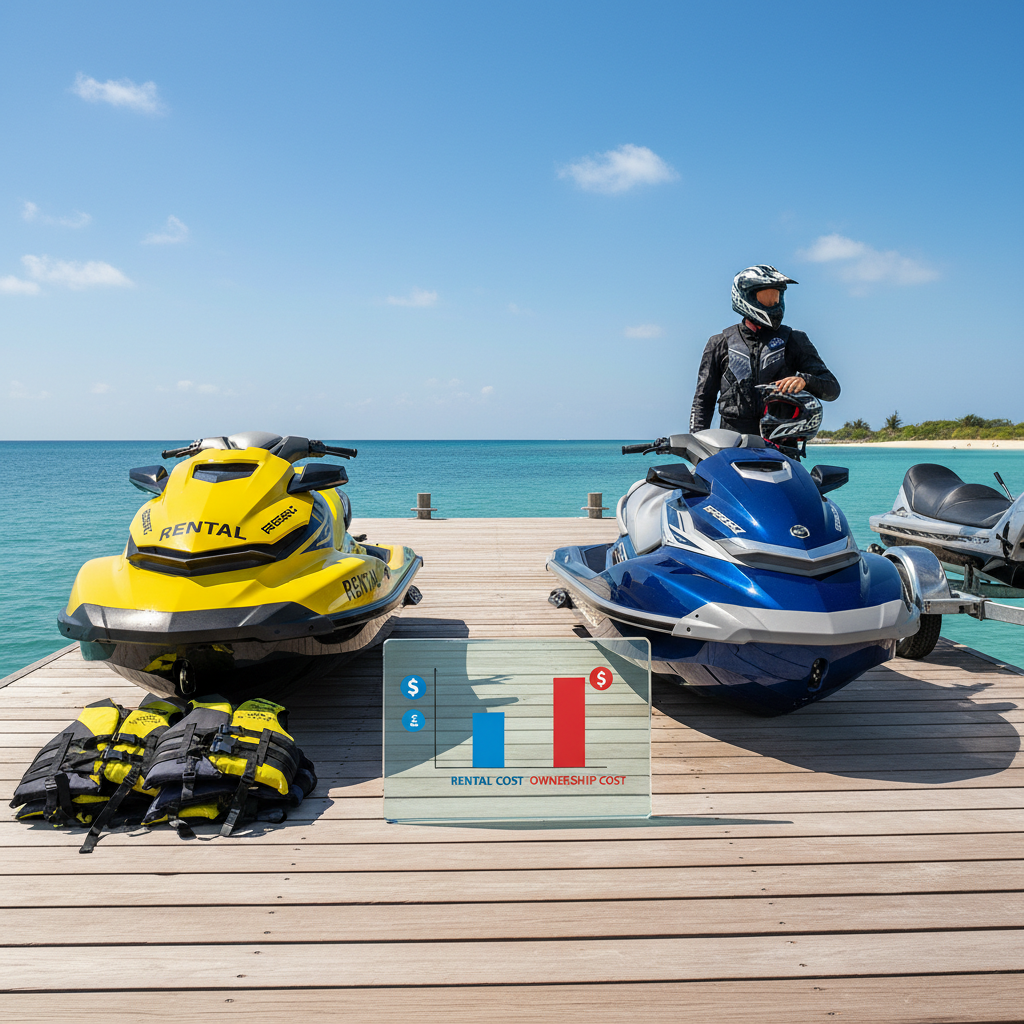
Jet Ski Rental vs Buying: The Definitive 2026 Cost Comparison
The allure of skimming across the water on a personal watercraft (PWC) is undeniable. It’s a vision of summer freedom, adrenaline, and sun-soaked fun. But as you stand on the shore, a critical question emerges: should you rent for the day or invest in your own machine? The great jet ski rental vs buying debate is one every aspiring rider faces. This guide will provide a comprehensive breakdown of the real costs, benefits, and hidden factors of both options, helping you make the most informed decision for your budget and lifestyle in 2026.
Making the right choice isn't just about the sticker price; it's about understanding the total cost of ownership versus the convenience of renting. We'll explore everything from the initial purchase and gear-up costs to the ongoing expenses of maintenance, insurance, and storage. By the end, you'll have a clear picture of the financial break-even point and be ready to decide which path to the water is right for you.
The Upfront Cost: Breaking Down the Initial Investment of Ownership
The most significant financial hurdle to PWC ownership is, without a doubt, the initial purchase price. This figure can vary dramatically based on whether you're buying new or used, the model's performance level, and its features. As of 2026, a brand-new, entry-level model might start around $8,000, while top-tier performance or luxury models can easily exceed $22,000. These machines offer the latest technology, full warranties, and that unbeatable new-PWC smell.
However, the pre-owned market offers incredible value. You can find a reliable, well-maintained used PWC for anywhere from $5,000 to $15,000. Exploring the wide variety of personal watercraft for sale is the best way to gauge the market and find a machine that fits your budget. Popular brands like Yamaha and Kawasaki, along with the extensive lineup of Sea-Doo personal watercraft, are always in high demand on the used market due to their proven reliability and parts availability.
Essential Gear and One-Time Fees
The price on the listing is just the beginning. To get on the water legally and safely, you need to budget for several other one-time costs. These are non-negotiable expenses that are part of the initial ownership package. Don't let them catch you by surprise; factor them into your total upfront budget from day one.
- Trailer: Unless you live on the water, you'll need a trailer. A new single-PWC trailer typically costs between $1,500 and $3,000. You can find used ones for less, but inspect them carefully for rust and tire condition.
- Safety Equipment: This includes USCG-approved life vests for every rider ($50-$100 each), a fire extinguisher, a sound-signaling device (whistle or horn), and registration numbers/letters for the hull. Budget at least $200-$400 for a complete safety kit.
- Taxes, Title, and Registration: Sales tax will apply to the purchase price of the PWC and trailer. Additionally, you'll need to pay state fees for titling and registering your new watercraft, which can range from $50 to over $200 depending on your location.
- Boater Education: Many states require a boater safety course for PWC operators. This is especially true in high-traffic states, so if you're looking at jet skis for sale in Florida, be sure to check local regulations. These courses are often inexpensive ($30-$50) and can be completed online.
The "Hidden" Costs of Owning a Jet Ski
Once you've covered the upfront investment, the ongoing expenses of ownership begin. These recurring costs are what truly differentiate owning from renting and are a critical part of the jet ski rental vs buying calculation. Many first-time buyers underestimate these annual expenses, which can significantly impact the overall affordability of the hobby.
These costs aren't 'hidden' to seasoned owners, but they can be a major surprise for newcomers. From routine service to off-season storage, owning a PWC is a year-round financial commitment, even if your riding season is only a few months long. A realistic budget for these items is key to a stress-free ownership experience.
Annual Maintenance and Repairs
Just like a car, a PWC requires regular maintenance to run reliably and safely. Annual service, which includes an oil change, spark plug inspection, and a general check-over, can cost between $300 and $500 at a dealership. At the end of the season, winterization is crucial to protect the engine and systems from freezing temperatures, costing an additional $150 to $300. In the spring, you'll have a de-winterization or summerization service to get it ready again.
Beyond routine service, you must budget for potential repairs. While modern PWCs are very reliable, things can still go wrong. A worn impeller, a faulty sensor, or hull damage can lead to repair bills ranging from a few hundred to several thousand dollars. Researching specific models in our complete jet ski model directory can give you an idea of known issues and long-term reliability.
Insurance, Storage, and Fuel Expenses
These three items represent significant and unavoidable annual costs. PWC insurance is essential for liability and to protect your investment, with annual premiums typically ranging from $300 to $600, depending on your driving record, the PWC's value, and your coverage level. Storage is another major consideration. If you can't keep it in your garage, you'll need to pay for a solution. A spot at a dry-stack facility or marina can cost $100 to $300+ per month, while outdoor storage yard space might be cheaper.
Finally, there's fuel. A modern PWC can burn anywhere from 5 to 20 gallons of gasoline per hour of spirited riding. If you spend a full 4-hour day on the water, you could easily use 30-40 gallons of fuel. At an average of $4.00 per gallon, that's $120-$160 for a single day of fun, a cost that adds up quickly over a season.
Analyzing the Cost and Convenience of Renting
For those who want to experience the thrill without the commitment, renting is an attractive option. The primary benefit is simplicity. You show up, sign a waiver, get a quick tutorial, and hit the water. There are no maintenance worries, no insurance premiums, and no storage fees. In 2026, typical rental rates are about $90-$150 per hour, with half-day (4-hour) or full-day (8-hour) packages offering better value, often in the $350-$600 range.
Most rentals include the PWC, life vests, and fuel. It's a predictable, all-in-one cost. However, renting has its downsides. You're often limited to a specific riding area, and time is always ticking. The available watercraft are usually base models, not high-performance machines. Furthermore, you can't customize the PWC or take it to your secret favorite spot. This is a key trade-off in the jet ski rental vs buying consideration: you trade freedom and flexibility for convenience and zero long-term responsibility.
The Break-Even Point: How Often Do You Need to Ride?
This is where the math truly matters. Let's create a realistic first-year ownership scenario for a used PWC. Assume a total upfront cost of $9,000 ($7,000 for the PWC and trailer, $500 for gear, $1,500 for taxes/fees). Add an estimated $1,800 for the first year's ongoing costs (insurance, maintenance, storage). Your total first-year investment is approximately $10,800.
Now, let's compare that to renting. An average 4-hour rental costs about $350. To find the break-even point, you divide the first-year ownership cost by the rental cost: $10,800 / $350 = ~30. This means you would need to go for a 4-hour ride about 30 times in the first year to make ownership financially equivalent to renting. If you ride every weekend during a 4-month season, you'll easily surpass this. If you only plan to go 5-10 times a year, renting is the clear financial winner. This calculation is the heart of the jet ski rental vs buying decision.
Beyond the Numbers: Lifestyle, Freedom, and Resale Value
The decision isn't purely financial. Ownership offers intangible benefits that a rental can't match. It’s the freedom to go riding at sunrise on a whim, to trailer your PWC to a new lake or coastline, or to join a community of fellow owners. Whether you're exploring the waters near our popular listings for jet skis for sale in North Carolina or cruising the intracoastal, that freedom is priceless for enthusiasts.
Moreover, a PWC is an asset. Unlike rental fees, which are gone forever, a well-maintained watercraft holds its value surprisingly well. When you're ready to upgrade or move on, you can sell your jet ski and recoup a large portion of your initial investment, dramatically lowering your total cost of ownership over time. You can always browse the newly listed jet skis to see what the market values are.
Conclusion: Making the Right Choice for Your Water Lifestyle
Ultimately, the choice in the jet ski rental vs buying dilemma comes down to three factors: frequency of use, budget, and your desire for convenience versus freedom. If you plan to ride more than 15-20 times per season, have the budget for the upfront and ongoing costs, and crave the spontaneity of ownership, buying is likely your best bet. The pride of ownership and the ability to explore on your own terms are powerful motivators.
If you're a casual user who will only ride a few times a year, or if you want to avoid the responsibilities of maintenance and storage, renting is the smarter, more cost-effective path. It provides all the fun with none of the hassle. Whichever you choose, the water is waiting. If you're ready to explore the incredible world of PWC ownership, start by browsing our featured jet ski listings and find the perfect machine to start your adventure.
Frequently Asked Questions
Is it cheaper to rent or buy a jet ski for a summer?
For a single summer, if you plan to ride more than 15-20 times, buying a quality used PWC and selling it at the end of the season can sometimes be cheaper than renting every time. However, this involves the effort of buying and selling. For most people who want a hassle-free summer with 5-10 rides, renting remains the more financially prudent and convenient option.
What's the true annual cost of owning a jet ski?
After the initial purchase, you should budget for recurring annual costs. A realistic estimate is between $1,500 and $3,000 per year. This covers insurance ($300-$600), routine maintenance and winterization ($500-$800), and storage ($600-$2,000+ if not stored at home). This figure does not include fuel, trailer maintenance, or unexpected repair costs.
How many hours a year is a lot for a jet ski?
The average recreational user puts about 30-50 hours on their PWC per year. A machine with over 100 hours is not necessarily 'high-hour' if it has been well-maintained; modern PWC engines can last for many hundreds of hours with proper care. When buying used, a service history is more important than the total hours on the clock.
Ready to buy or sell? Explore the jet ski marketplace, browse jet skis for sale, or jet ski valuation calculator at Jet Sports Trader.
Related Articles
Writing a Jet Ski Listing That Sells: Description Templates That Work
Crafting the perfect jet ski listing description is key to a fast sale. Learn our expert tips and use our proven templates to attract serious buyers and get top dollar for your PWC.

How to Photograph Your Jet Ski to Sell It Faster
Your jet ski listing photos are the key to a fast sale. This guide provides pro tips on lighting, angles, and staging to attract more buyers and get the best price.

Selling a Jet Ski Privately vs Trading In: Which Pays More?
Should you sell your jet ski privately for more cash or trade it in for convenience? This guide breaks down the true value of each option to help you decide which pays more.
Ready to Find Your Perfect Jet Ski?
Browse thousands of listings from trusted dealers nationwide