
Jet Ski Lift and Dock Storage Options Compared
Protect your PWC with the right jet ski lift or dock. This guide compares freestanding, dock-mounted, and floating lifts against modern drive-on ports to help you choose the best option.
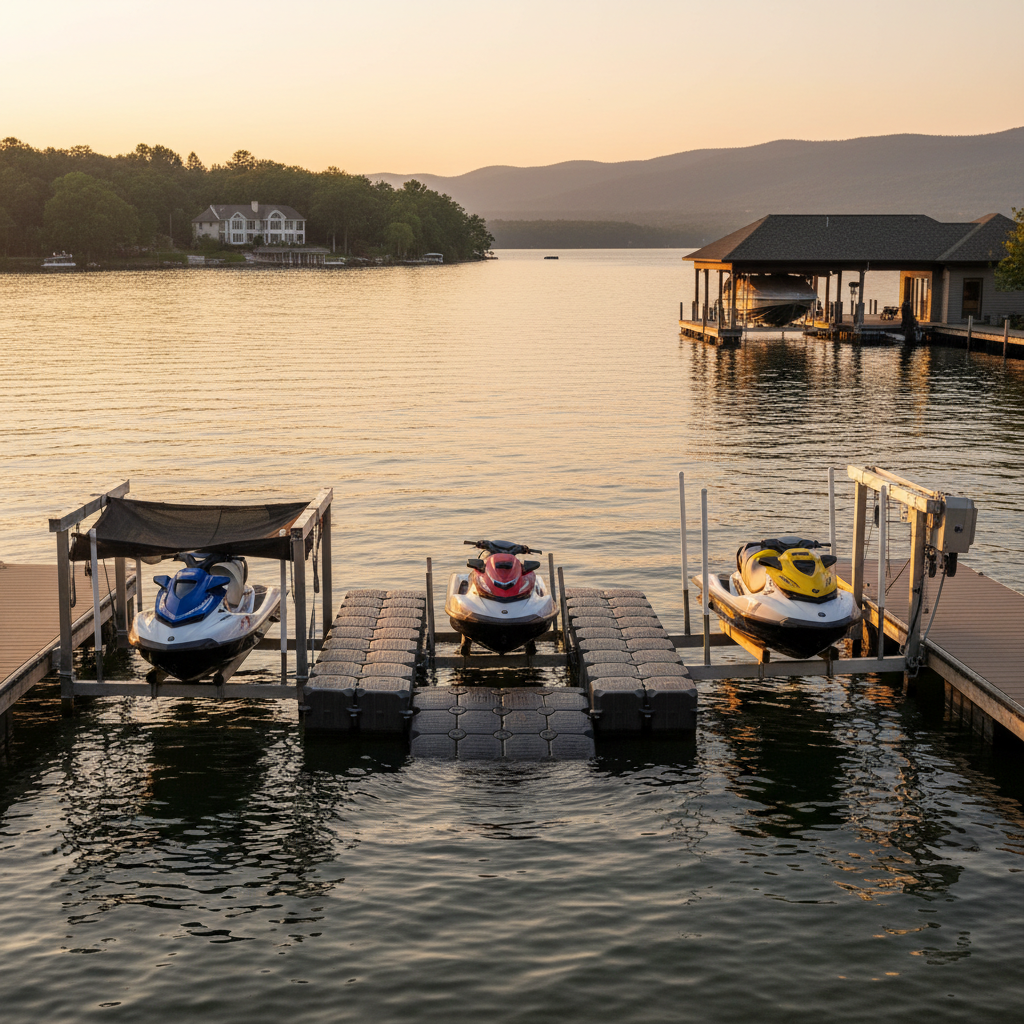
Jet Ski Lift and Dock Storage: The 2026 Ultimate Guide
You’ve invested in the thrill of a personal watercraft (PWC), but the adventure doesn't end when you return to the shore. Proper storage is one of the most critical aspects of ownership, directly impacting your jet ski's longevity, performance, and value. Leaving your PWC in the water exposes it to marine growth, corrosion, and potential storm damage. This guide will explore the best solution: the jet ski lift. We'll compare different types of lifts, floating docks, and other storage options to help you make the smartest choice for protecting your prized watercraft.
Understanding your storage options is just as important as choosing the right PWC in the first place. A quality storage system minimizes maintenance, makes launching and docking effortless, and safeguards your investment for years of enjoyment. Whether you're a seasoned rider or just starting your journey, this comprehensive comparison will provide the clarity you need to select the perfect docking and lift system for your specific situation.
Why a Dedicated Jet Ski Lift is a Smart Investment
Simply tying your jet ski to a dock might seem easy, but it's a short-term solution with long-term consequences. Keeping a PWC in the water, especially saltwater, accelerates wear and tear. A dedicated jet ski lift or drive-on port elevates your watercraft completely out of the water, offering a multitude of benefits that far outweigh the initial cost. Protecting your investment should be a top priority, and proper storage is the first line of defense.
The primary advantage is the prevention of hull delamination and osmosis. When a fiberglass hull is submerged for extended periods, water can slowly permeate the gelcoat, leading to blistering and structural weakness. This is a costly and difficult repair that is entirely avoidable with an out-of-water storage solution. Furthermore, keeping your jet ski dry prevents the accumulation of algae, barnacles, and other marine life on the hull and in the jet pump intake. This growth creates drag, reduces top speed, and can cause serious damage to the impeller and pump housing if ingested.
Beyond protection, a lift offers unparalleled convenience. Launching becomes a simple, one-person job, no more struggling with trailers at a crowded boat ramp. You can be on the water in minutes, maximizing your ride time. This ease of use is particularly noticeable for owners of larger, heavier models like many popular Sea-Doo personal watercraft. When it comes time to sell, a well-maintained PWC that has been stored out of the water will command a higher price. You can even use our jet ski valuation calculator to see how condition impacts value. Proper storage is a key factor that prospective buyers look for.
Comparing Types of PWC Lifts
The term "jet ski lift" covers a range of mechanical systems designed to hoist your PWC. The best choice for you depends on your dock type, water depth, and budget. These lifts use manual winches or electric motors to raise and lower a carriage or bunk system that supports your watercraft.
Freestanding Lifts
Freestanding lifts are versatile structures that sit on the lakebed or seabed, making them ideal for locations without a fixed dock or where dock modifications are restricted. They typically have four adjustable legs to accommodate varying water depths and uneven bottoms. These lifts are incredibly stable and can be positioned exactly where you need them. They are a popular choice for lakefront properties, especially for those looking at jet skis for sale in Nevada for places like Lake Tahoe or Lake Mead. Most freestanding models use a manual winch, but electric motor upgrades are widely available for push-button convenience.
Dock-Mounted Lifts
As the name suggests, these lifts attach directly to the side of a fixed or floating dock. There are two primary styles: the rotating lift and the elevator lift. A rotating lift features a single mast that bolts to the dock, with an arm that swings out over the water to lower and retrieve the PWC. Once lifted, it can be swung back over the dock for maintenance or secure storage. An elevator lift, on the other hand, moves straight up and down along a track mounted to the dock pilings or seawall, making it a great space-saving option for narrow canals and tight spaces often found by owners of jet skis for sale in California.
Floating Lifts
Floating lifts are a hybrid solution, combining the principles of a lift with the buoyancy of a floating dock. These systems consist of a metal frame with air-filled tanks. An electric blower motor forces air out of the tanks, causing the lift to submerge so you can drive your PWC onto the bunks. The blower then pumps air back into the tanks, raising the entire lift and your PWC out of the water. They are an excellent choice for deep water or areas with significant water level fluctuations, as they rise and fall with the tide or lake level.
The Rise of Drive-On Floating Jet Ski Docks
In recent years, drive-on floating docks have become an incredibly popular alternative to a traditional mechanical jet ski lift. These modular, polyethylene ports offer a simple and effective way to keep your PWC high and dry. Instead of a mechanical lifting mechanism, you simply drive your watercraft onto the sloped entry of the port. A series of rollers guide the PWC into place, allowing it to settle securely on the platform, completely out of the water. Launching is just as easy, a gentle push is all it takes to slide the craft back into the water.
The benefits of these drive-on ports are numerous:
- Ease of Use: There are no cranks, cables, or motors. The drive-on/push-off method is intuitive and fast.
- Low Maintenance: Constructed from durable, UV-resistant plastic, these ports require virtually no upkeep beyond occasional cleaning. There are no moving parts to lubricate or electrical components to fail.
- Modularity and Scalability: Most systems are modular, allowing you to connect multiple ports together to create a larger platform for two or more PWCs. You can also add walkways and other accessories.
- Adaptability: Because they float, these docks are perfect for any water depth and automatically adjust to changing water levels, making them a fantastic option for tidal areas.
While they offer incredible convenience, it's important to choose a port with the correct size and buoyancy for your specific PWC. A port that is too small may not fully support the weight, leaving the stern in the water. For a comprehensive look at what to consider when purchasing a PWC, our jet ski buying guide is an invaluable resource. These floating docks are especially prevalent in states with extensive intracoastal waterways, and you'll see them everywhere when browsing jet skis for sale in Texas.
Choosing the Right Storage Solution for Your Needs in 2026
Selecting the perfect storage system boils down to evaluating a few key factors: your location, your PWC, and your budget. For 2026, the latest PWC models continue to get larger and heavier, so ensuring your chosen lift or port has an adequate weight capacity is more important than ever. Always check your PWC's dry weight and add about 15-20% for fuel, gear, and water saturation to determine the minimum capacity you need.
Consider your water conditions. For saltwater environments, prioritize materials like marine-grade aluminum for lifts and high-quality polyethylene for floating docks to resist corrosion. If you're in an area with fluctuating water levels, a floating lift or a drive-on port is far more practical than a fixed-height freestanding or dock-mounted lift. Finally, think about your long-term plans. If you plan to sell your PWC in the future, investing in a quality jet ski lift system can be a major selling point. Highlighting this in your listing is one of our top jet ski selling tips.
Ultimately, the best jet ski lift or dock is the one that you will use consistently. The goal is to make boating easier and protect your asset. Whether it's the mechanical power of an elevator lift or the simple convenience of a drive-on port, the right choice will enhance your entire PWC experience. For more expert advice, be sure to check out our blog for the latest jet ski news and guides.
Frequently Asked Questions
How much does a jet ski lift cost?
The cost of a jet ski lift or drive-on port varies widely. A simple, manual winch freestanding lift might start around $1,500-$2,500. A quality drive-on floating port typically costs between $1,800 and $3,000. For electric-powered dock-mounted or floating lifts, prices can range from $4,000 to over $8,000, depending on the brand, materials, and lifting capacity.
Can I install a jet ski lift myself?
Installation difficulty depends on the type. Most drive-on floating docks are designed for DIY installation and can be assembled and put in the water in just a few hours with basic tools. Freestanding lifts can also be assembled by a handy owner, but positioning them in the water can be challenging. For more complex systems like rotating or elevator lifts that mount to a dock or seawall, professional installation is highly recommended to ensure structural integrity and safety.
What's better: a mechanical lift or a floating drive-on dock?
Neither is definitively "better", it depends on your priorities. A mechanical jet ski lift often raises the PWC higher out of the water, offering superior protection from spray and waves. They are also a better solution for very heavy, three-seater models. However, floating drive-on docks win on convenience, simplicity, and low maintenance. If you value speed and ease of use above all else, a drive-on port is likely the best choice for you.
Ready to buy or sell? Explore the jet ski marketplace, browse jet skis for sale, or sell your jet ski at Jet Sports Trader.
Related Articles
Best Jet Skis Under $10,000: Smart Buys on the Used Market
Looking for a jet ski under $10,000? Discover the best used models from Sea-Doo, Yamaha, and Kawasaki that offer incredible value and performance without breaking the bank.
Two-Seater vs Three-Seater Jet Skis: Choosing the Right Size
Is a 3 seater jet ski right for you? This guide breaks down the key differences in performance, stability, storage, and cost between two and three-seater models.

Jet Ski Warranties and Extended Coverage: Are They Worth It?
Is an extended jet ski warranty worth the cost? This guide covers the pros, cons, and what's included to help you decide if PWC extended coverage is a smart investment for you.
Ready to Find Your Perfect Jet Ski?
Browse thousands of listings from trusted dealers nationwide