
How to Inspect a Used Jet Ski Before You Buy: 25-Point Checklist
Ready to buy a used PWC? Don't get stuck with a lemon. Our comprehensive used jet ski inspection checklist covers 25 critical points to ensure you make a smart investment.
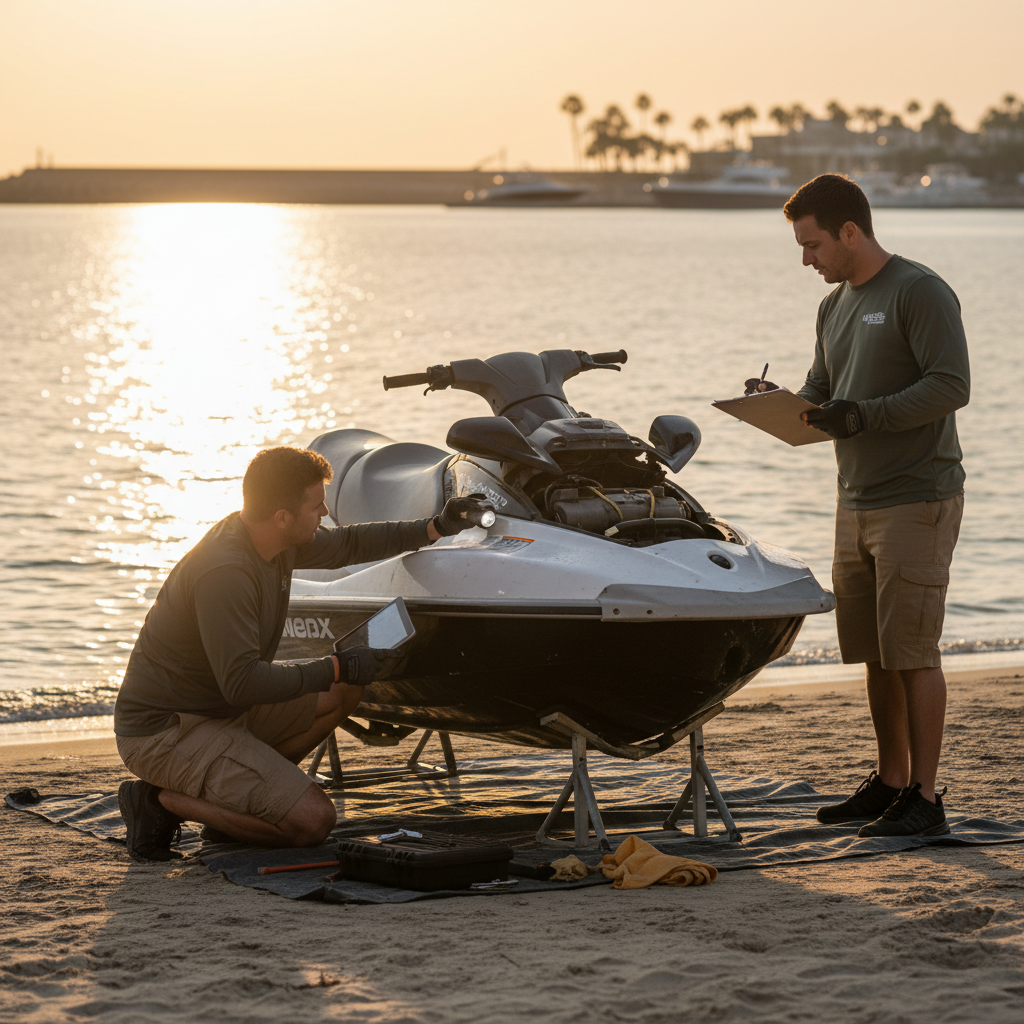
How to Inspect a Used Jet Ski Before You Buy: 25-Point Checklist
Buying a used personal watercraft (PWC) is an exhilarating way to get on the water without the steep price tag of a brand-new model. However, the excitement of scoring a great deal can quickly turn into a costly headache if you don't know what to look for. A thorough used jet ski inspection is the single most important step in the buying process, protecting you from hidden issues and ensuring your investment provides seasons of fun, not frustration. This guide provides an expert-level, 25-point checklist to empower you, whether you're a first-time buyer or a seasoned rider. Follow these steps, and you'll know exactly how to evaluate any PWC with confidence.
Before You Go: The Pre-Inspection Checklist
A successful inspection begins before you even see the jet ski. Proper preparation sets the stage for a smooth and effective evaluation. Start by researching the specific model you're interested in. Our complete jet ski model directory is a great resource for understanding the history, specs, and known issues of various models. Some PWCs, for example, have reputations for being exceptionally reliable, while others might have known quirks that require attention.
Next, have a direct conversation with the seller. Ask them pointed questions about the PWC's history, such as how many hours are on the engine, where it was primarily used (freshwater vs. saltwater), and if they have maintenance records. A seller who is transparent and provides detailed service history is often a good sign. Finally, have your finances in order. Understanding your budget and potential monthly payments by using a jet ski financing calculator can help you negotiate from a position of strength and make a firm offer when you find the right machine.
The Visual Walk-Around: Hull and Body Inspection (Points 1-8)
Your first impression of the jet ski's overall condition starts with a detailed visual walk-around. Don't be shy, get up close and examine every surface. A PWC that looks pristine on the outside has often been well-cared-for on the inside, but you must verify.
Hull Integrity and Damage
The hull is the foundation of the jet ski. Start by checking the entire surface for signs of damage. Minor scuffs and scratches are normal, but you're looking for red flags.
1. Check for Major Cracks: Inspect the hull, especially around the bond line where the top and bottom halves meet, for any stress cracks or signs of separation.
2. Look for Deep Gouges: Deep gouges that penetrate the gelcoat and expose the fiberglass underneath can absorb water and lead to delamination.
3. Identify Previous Repairs: Look for areas with mismatched paint, uneven gelcoat, or sanding marks, which indicate a past repair. A professional repair is fine, but a poor one can hide serious structural damage.
4. Inspect Keel and Chines: Check the bottom of the hull (the keel) and the sharp edges (chines) for excessive wear from beaching.
Deck, Seat, and Handlebars
The top deck is where you'll spend all your time, so its condition matters for both comfort and safety.
5. Examine the Seat: Check the seat vinyl for rips, tears, or sun-fading. A torn seat can absorb water, leading to a rotted foam core.
6. Test the Handlebars: Ensure the handlebars turn smoothly from side to side without sticking and are perfectly straight.
7. Inspect Footwell Mats: Look at the traction mats. If they are peeling up or excessively worn, it could indicate high usage or neglect.
8. Check Storage Compartments: Open all storage compartments. Check that the latches work correctly and look for any signs of water intrusion or mold.
Under the Seat: A Deep Dive into the Engine Bay (Points 9-17)
The engine is the heart of the PWC. This part of the used jet ski inspection is non-negotiable, even if you're not a mechanic. A clean, well-maintained engine bay is a fantastic sign, while a dirty, corroded one is a major warning.
Engine and Mechanical Components
You can learn a lot just by looking. Bring a flashlight to get a clear view of all components.
9. Verify Engine Hours: This is a critical metric. A well-maintained PWC can last for many hours, but generally, under 100 hours is considered low, while over 300 may warrant more scrutiny, especially on older models.
10. Look for Corrosion: If the ski was used in saltwater, check for white, chalky residue on metal parts. Pay close attention to the engine block, head, and exhaust manifold.
11. Check for Leaks: Look for signs of oil, coolant, or fuel leaks. Check under the engine and along all hoses and fittings.
12. Inspect Hoses and Clamps: Squeeze the hoses; they should be firm, not brittle or mushy. Check that all hose clamps are tight and free of rust.
13. Examine Wiring: Look for clean, organized wiring. Frayed wires or messy electrical tape can indicate shoddy repairs.
14. Check the Battery: Ensure the battery terminals are clean and free of corrosion. Ask about the battery's age; most only last 3-5 years.
15. Inspect the Bilge Area: The area at the bottom of the hull should be relatively clean. Excessive water, oil, or grime can signal a leak.
16. Pull the Dipstick: If it's a 4-stroke model, check the oil. It should be a honey color, not milky (which indicates water) or black and gritty.
17. Check Sacrificial Anodes: If present, these small metal parts are designed to corrode to protect the engine. If they are completely worn away, it could mean the rest of the engine has been taking the hit.
Drivetrain and Propulsion System Check (Points 18-22)
The propulsion system turns engine power into thrust. Problems here can be expensive to fix and severely impact performance. You'll need to look underneath the rear of the PWC.
18. Inspect the Impeller: This is the 'propeller' of the jet ski. Use a flashlight to look into the jet pump nozzle. The impeller's leading edges should be smooth and sharp. Major dings, chips, or bent blades will cause vibration and rob the PWC of power.
19. Check the Wear Ring: The wear ring is a sacrificial ring that surrounds the impeller. Check the gap between the impeller blades and the ring. A large gap (more than the thickness of a credit card) means it needs replacement.
20. Examine the Intake Grate: Look at the grate on the bottom of the hull that feeds water to the pump. Ensure it's not bent or clogged with debris.
21. Inspect the Driveshaft: Look for any visible wobble or signs of wear on the driveshaft where it enters the pump.
22. Test the Steering and Reverse Nozzles: While the handlebars are turned, check that the steering nozzle moves freely. If equipped with a reverse bucket, ensure it engages and disengages smoothly. This is a crucial step when considering one of the many personal watercraft for sale on the market.
The Final Checks and Water Test (Points 23-25)
These final steps, especially the water test, are what separate a good deal from a great one. If a seller is hesitant to let you perform a water test, consider it a significant red flag.
23. Perform a Water Test: This is the ultimate confirmation. On the water, check for smooth acceleration, listen for unusual engine noises, and ensure it tracks straight. Test the top speed and make sure the PWC doesn't feel like it's vibrating excessively.
24. Test All Electronics: During the water test or on the trailer with a hose connected (if the seller allows), test the digital display, trim system (VTS), and any other electronic features.
25. Verify Paperwork: The final step of your used jet ski inspection is to match the Hull Identification Number (HIN) on the PWC with the title and registration. Ensure the seller's name is on the title and that it's clean and free of liens.
Conclusion: Making a Smart Purchase
Performing a detailed used jet ski inspection may seem daunting, but this 25-point checklist simplifies the process. By taking your time and being methodical, you can accurately assess the condition of any PWC and identify potential problems before they become your own. Remember, a few hundred dollars saved on a 'great deal' can quickly be erased by a thousand-dollar repair. Whether you're looking at reliable Yamaha WaveRunners or other top brands, this diligence pays off. Armed with this knowledge, you're ready to find the perfect machine. Start your search today and confidently browse jet skis for sale from sellers across the country.
Frequently Asked Questions
What are the most important things to check on a used jet ski?
The three most critical areas are the engine, the hull, and the jet pump. For the engine, check the hours and look for any signs of corrosion or leaks. For the hull, inspect for major cracks or poor repairs, not just cosmetic scratches. For the jet pump, examine the impeller and wear ring for damage, as this directly affects performance and can be costly to repair. A successful used jet ski inspection hinges on these key areas.
How many hours is too many for a used jet ski?
This is a common question, but there's no single answer. A modern, well-maintained 4-stroke PWC from a reputable seller, like those you might find listed as jet skis for sale in Georgia, can easily last 500-1000 hours or more. However, a ski with 200 hours that was neglected and used in saltwater could be in worse shape than a freshwater ski with 400 hours and meticulous service records. As a general rule for 2026 buyers, anything under 100 hours is low, 100-300 is average, and over 300 requires a closer look and proof of consistent maintenance.
Can I inspect a used jet ski without a water test?
You can perform most of the inspection without a water test, but it's highly discouraged to buy without one. A water test is the only way to know for sure how the engine performs under load, if there are any leaks that only appear when running, or if there are vibrations from the driveline. If a water test is absolutely impossible, you can ask the seller to run the ski on a hose (for no more than 15-20 seconds) to at least hear the engine start and run. However, this carries significant risk, and the price should reflect that uncertainty.
What should I look for on the included trailer?
The trailer is an essential part of the package. Check the tires for dry rot and good tread. Inspect the frame for rust, especially if it's a painted steel trailer used in saltwater. Test the lights, check the wheel bearings for grease and ensure they don't feel loose or make noise when you spin the wheel, and make sure the winch and tongue jack operate correctly. A faulty trailer can be a safety hazard and an unexpected expense, whether you're buying from a private party or browsing jet skis for sale in Arizona.
Ready to buy or sell? Explore the jet ski marketplace, jet ski valuation calculator, or sell your jet ski at Jet Sports Trader.
Related Articles

Best Jet Skis Under $10,000: Smart Buys on the Used Market
Looking for a jet ski under $10,000? Discover the best used models from Sea-Doo, Yamaha, and Kawasaki that offer incredible value and performance without breaking the bank.

Two-Seater vs Three-Seater Jet Skis: Choosing the Right Size
Is a 3 seater jet ski right for you? This guide breaks down the key differences in performance, stability, storage, and cost between two and three-seater models.

Jet Ski Warranties and Extended Coverage: Are They Worth It?
Is an extended jet ski warranty worth the cost? This guide covers the pros, cons, and what's included to help you decide if PWC extended coverage is a smart investment for you.
Ready to Find Your Perfect Jet Ski?
Browse thousands of listings from trusted dealers nationwide